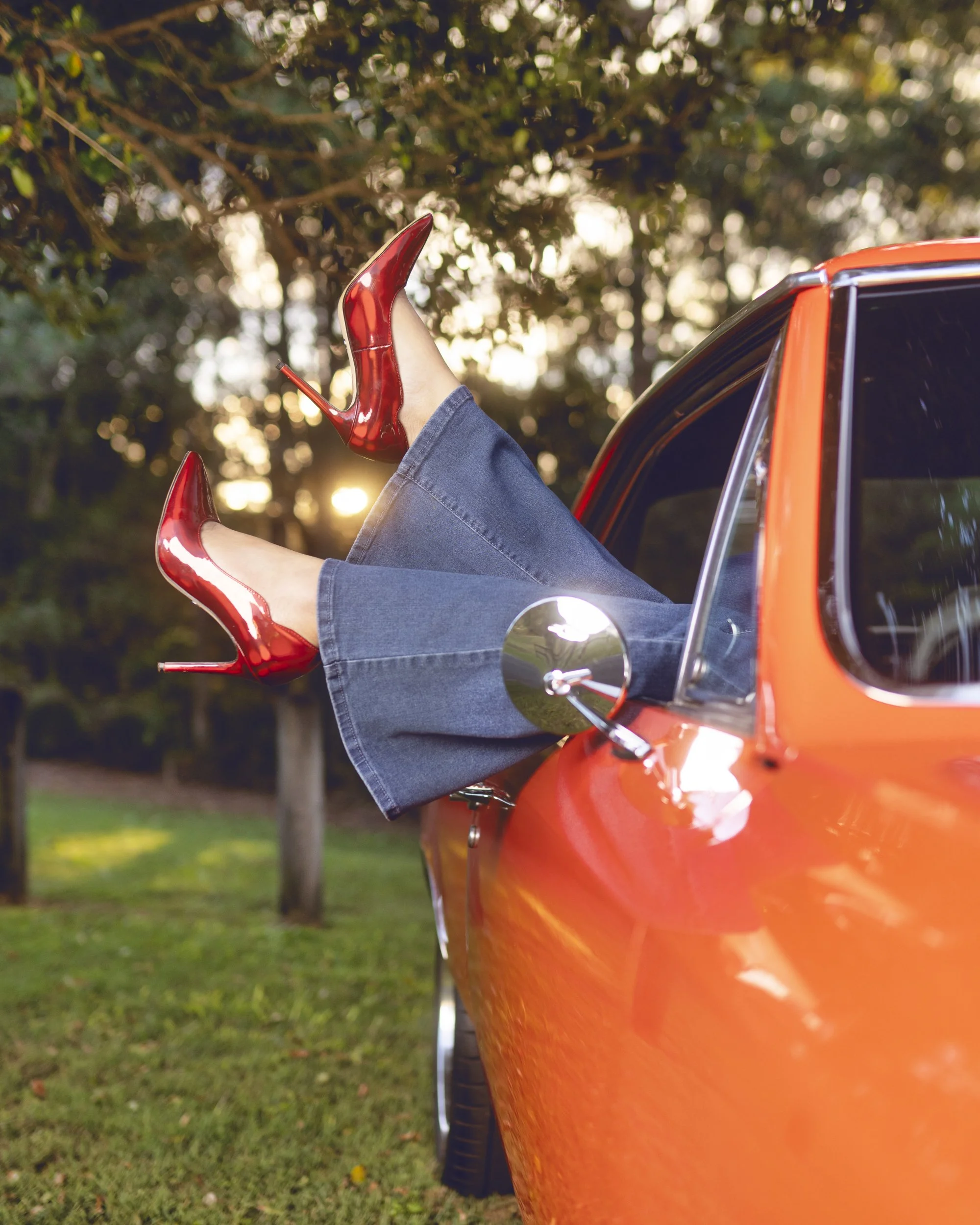
Two Sisters, Two ‘67 Chevy’s
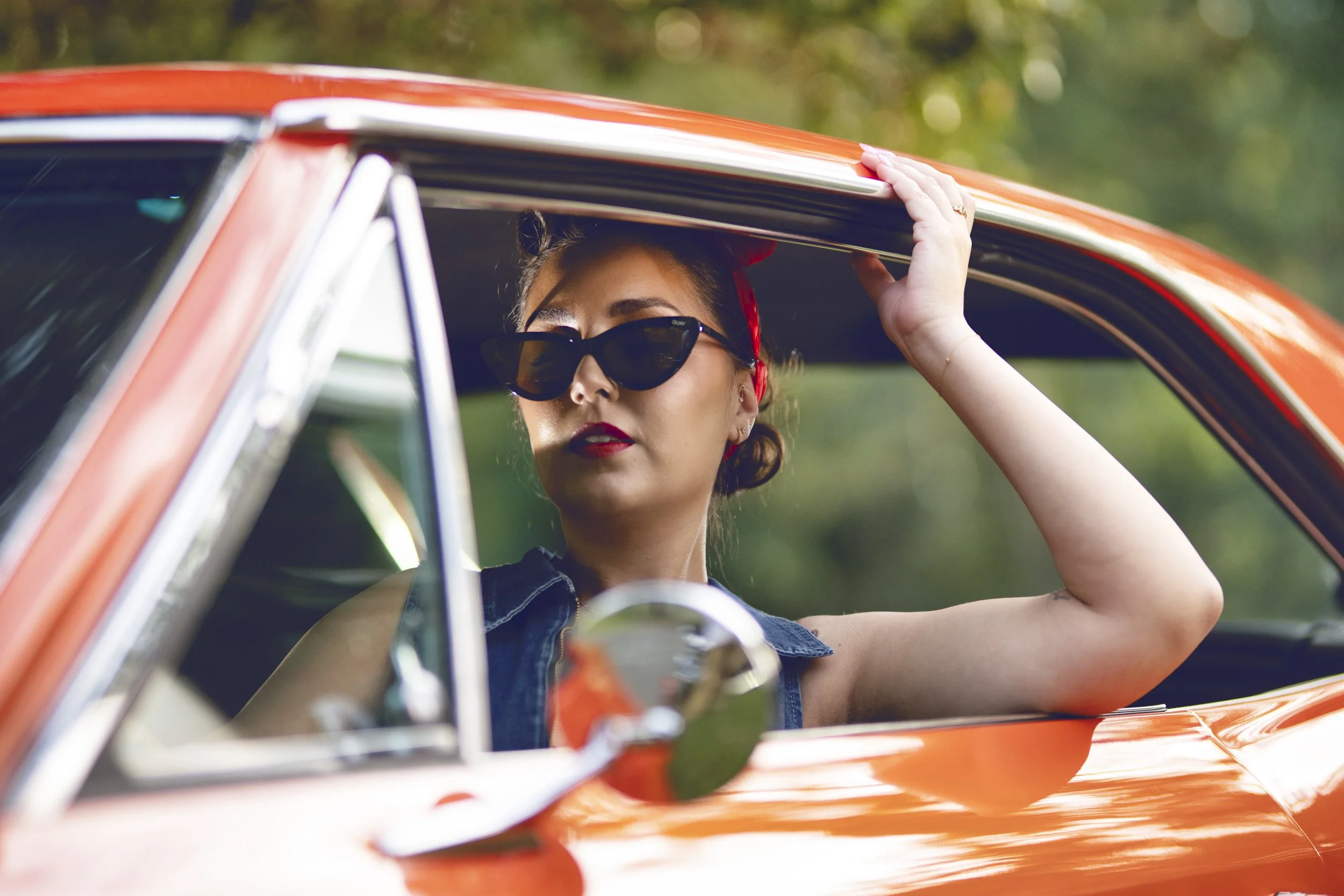
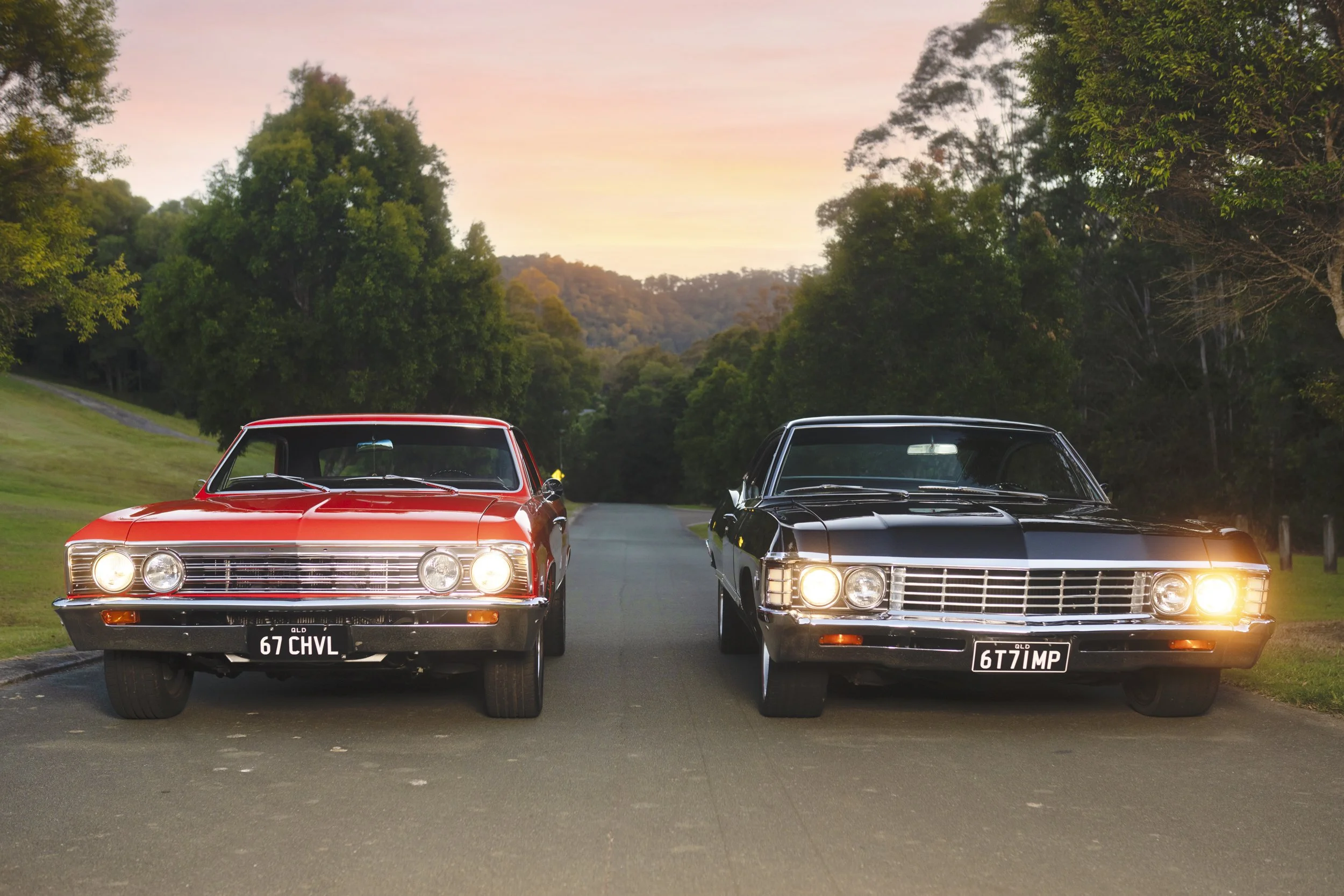
Late one afternoon in the Gold Coast Hinterland, I caught up with sisters Amanda and Sam for a shoot that was always going to be about more than just the cars. With Amanda’s black ’67 Impala and Sam’s bright orange ’67 Chevelle parked up in the fading light, the afternoon quickly became a mix of photographs, stories, laughs and plenty of family history. Two sisters, two very different Chevys, and a shared passion that has been part of their lives for as long as they can remember.
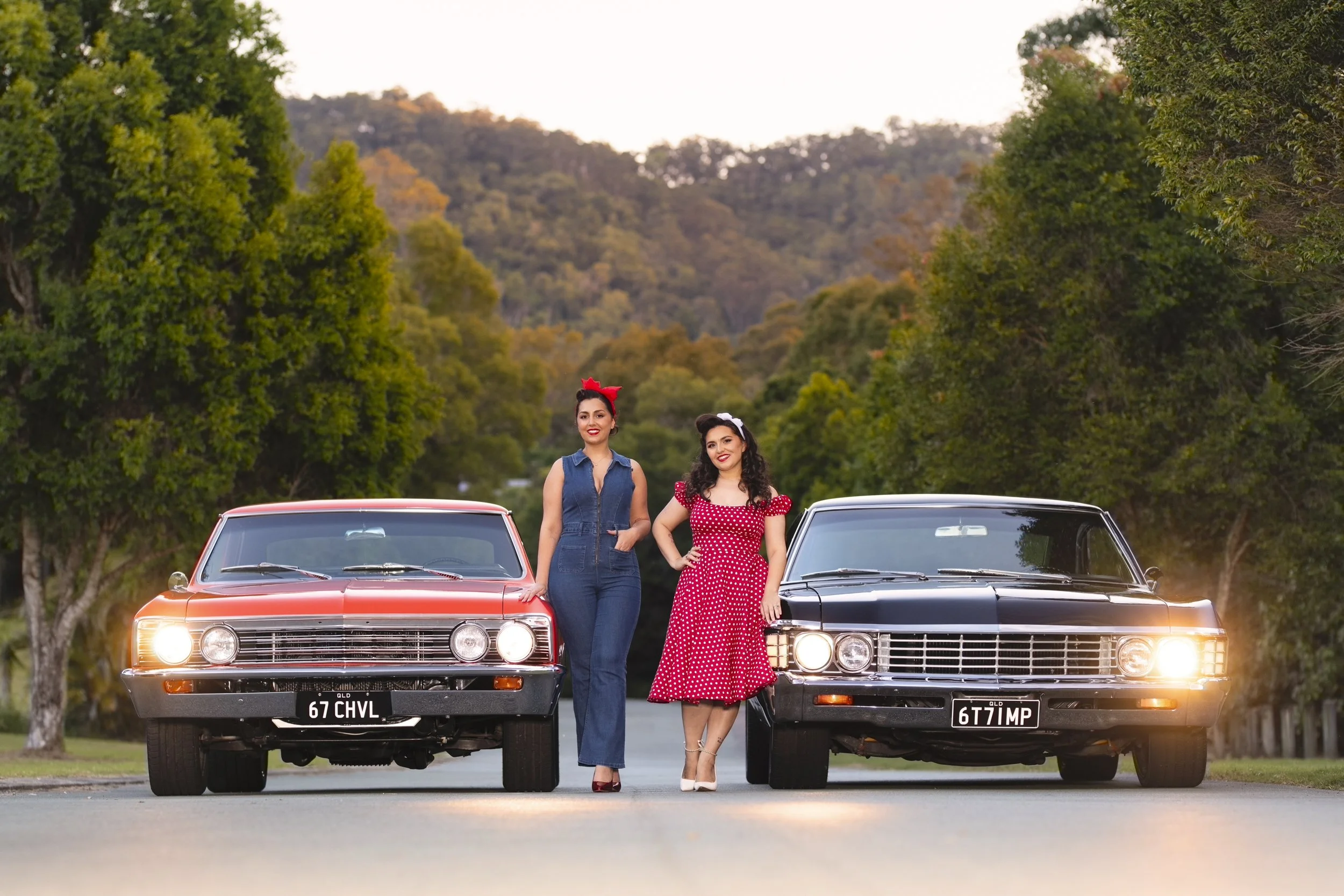
Amanda and Sam grew up around cars.
Not in the casual sense of a family that happened to have a nice old car tucked away in the garage, but properly immersed in it. Their dad had been building cars and racing the quarter mile since before either of them was born, so weekends around sheds, race tracks and half-finished projects were simply part of growing up.
Cars weren’t something they discovered later in life. They were already there.
Long before either sister owned a classic of her own, they had watched their dad work, listened, learned and absorbed the culture around them. Somewhere along the way, it became inevitable that both would eventually want a car of their own.
What perhaps wasn’t so inevitable was that they would both end up with 1967 Chevrolets.
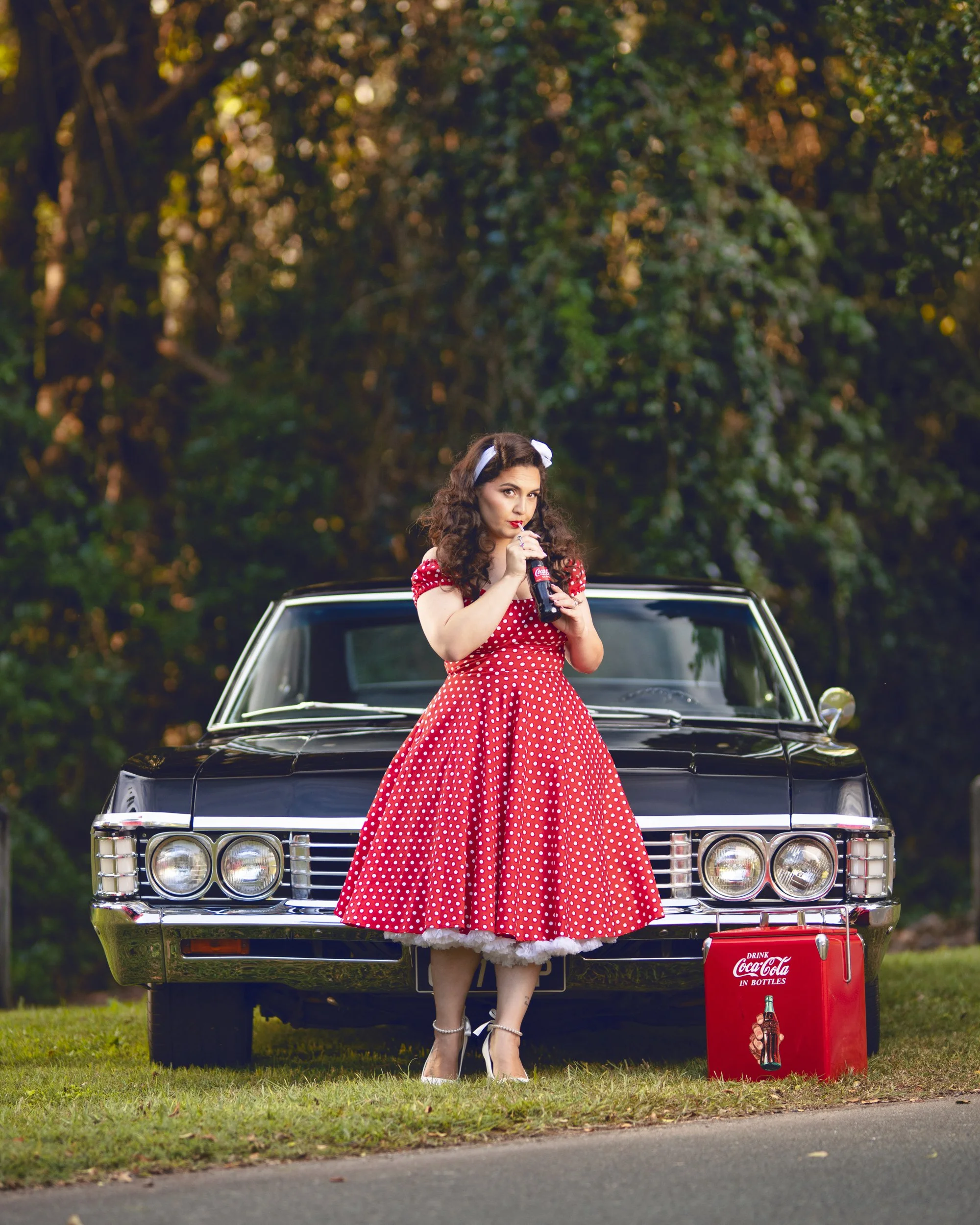
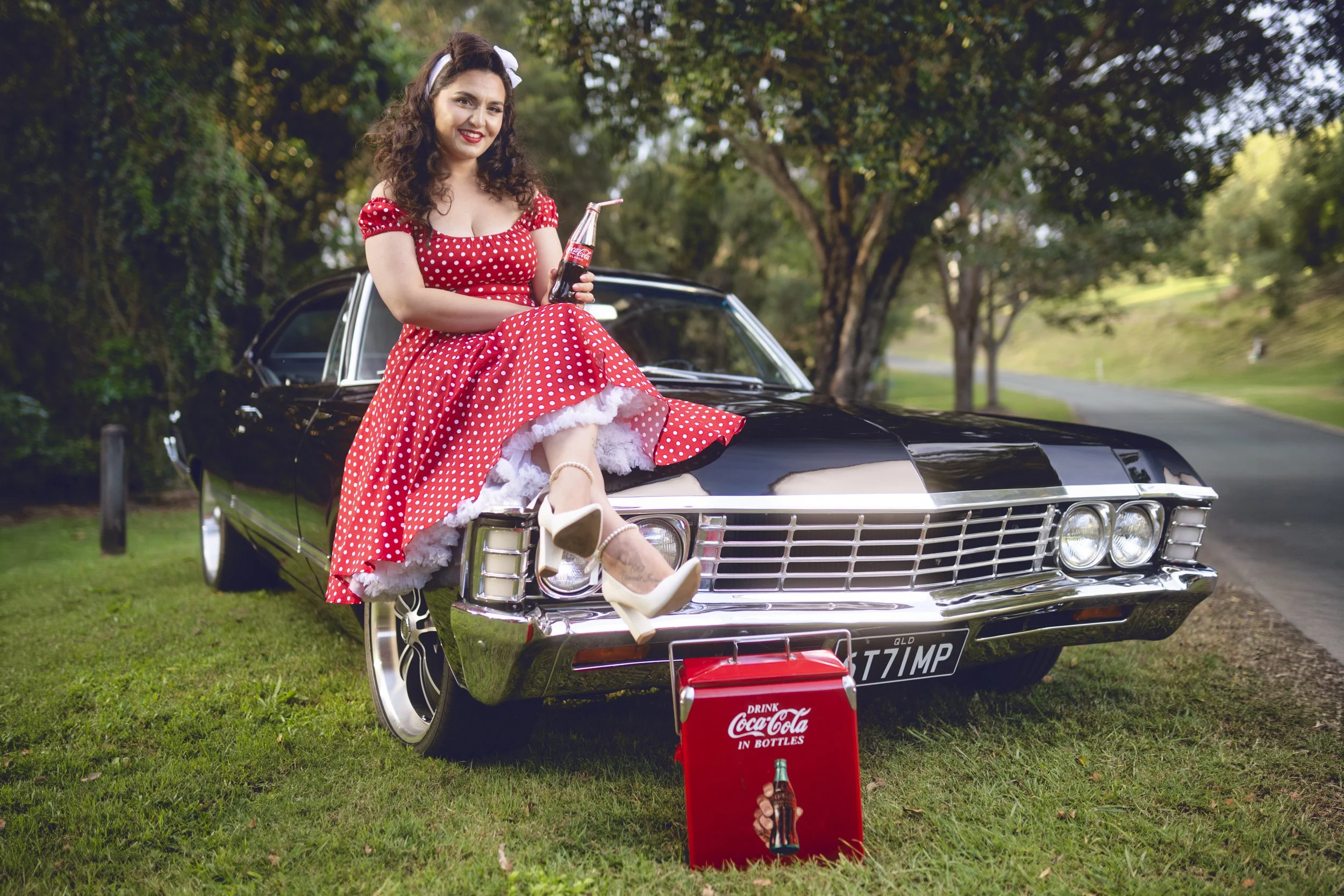
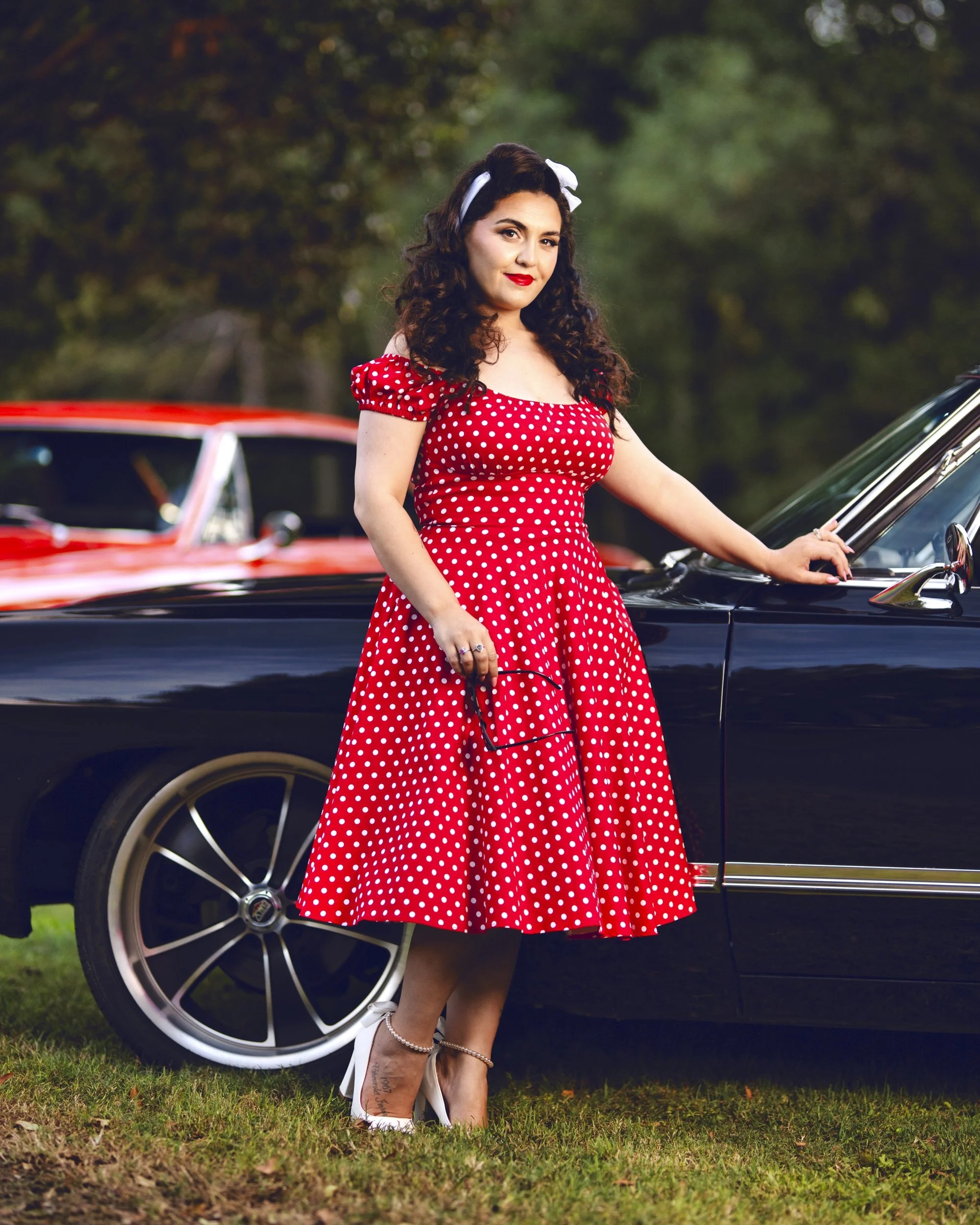
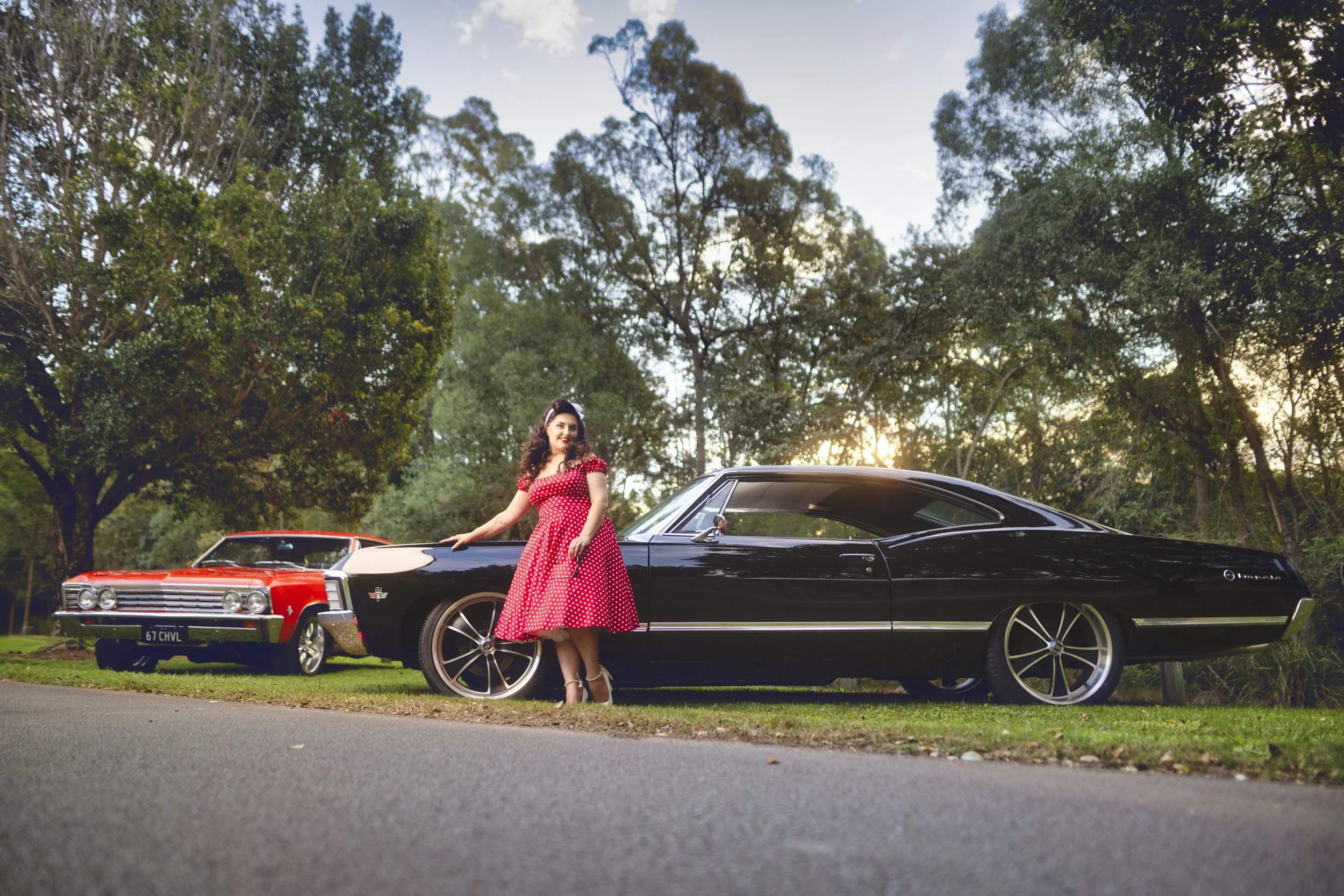
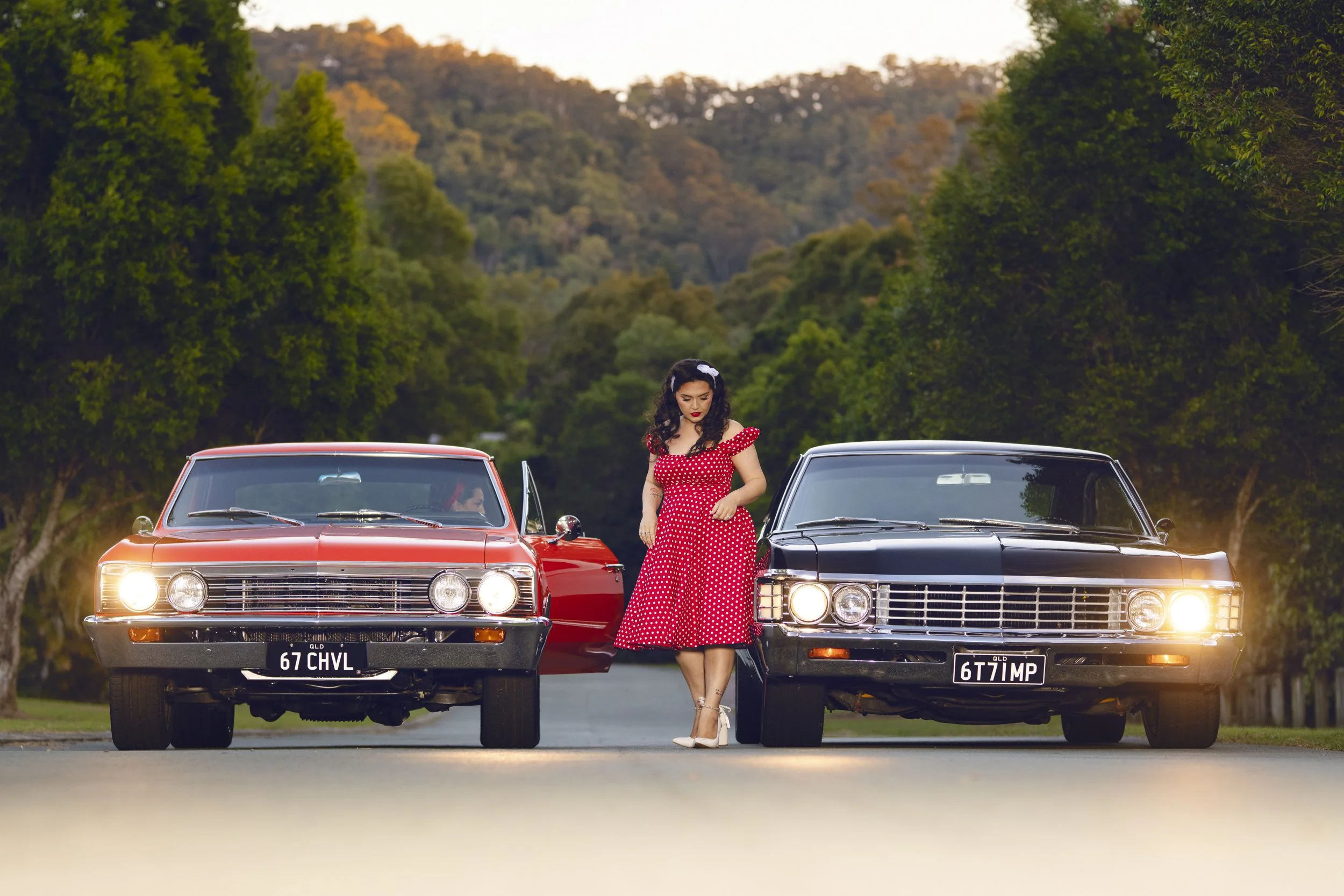
Amanda’s car is a black ’67 Impala. Sam’s is a bright orange ’67 Chevelle.
Parked together, there is an obvious family resemblance, but the two cars could hardly have more different personalities.
Much like their owners.
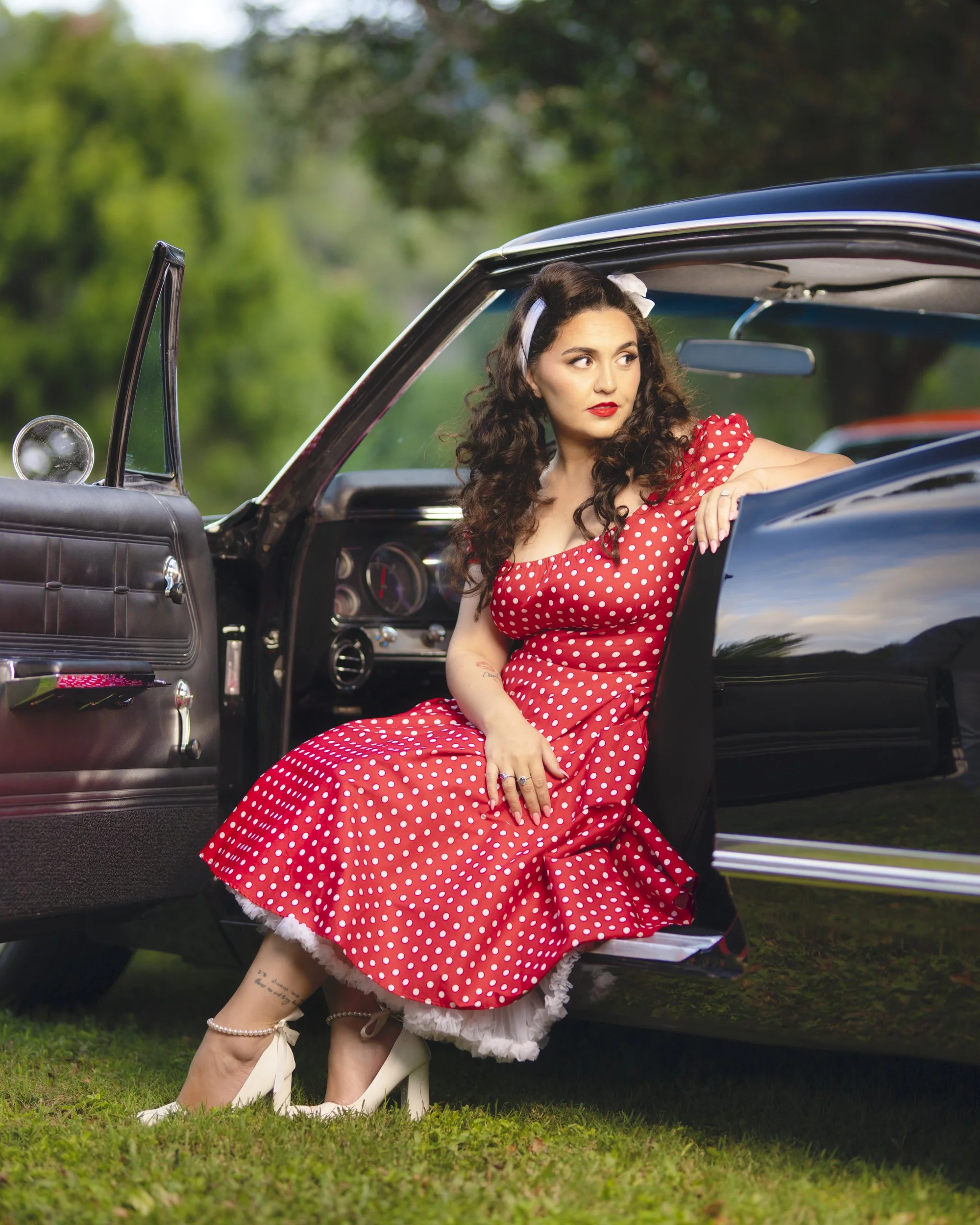
Amanda and the Impala
Amanda’s fascination with the 1967 Impala began with an unlikely source: Supernatural.
The black Impala used in the television series had left its mark, and Amanda had decided that one day she wanted one of her own.
She didn’t actually find the car herself.
While Amanda’s dad and her late Nunnu Peter were visiting a swap meet in America, they came across a ’67 Impala and immediately knew it was the model she had been searching for.
Amanda’s introduction to her future car came via a photograph.
There was Nunnu Peter, standing proudly beside the Impala, accompanied by a fairly simple message from Dad.
They’d bought it.
Months later, after the long journey from America, Amanda finally saw the car in person at the Brisbane shipping yard. After spending months looking at photographs and knowing her dream car was somewhere on a boat heading towards Australia, suddenly standing beside it made the whole thing real.
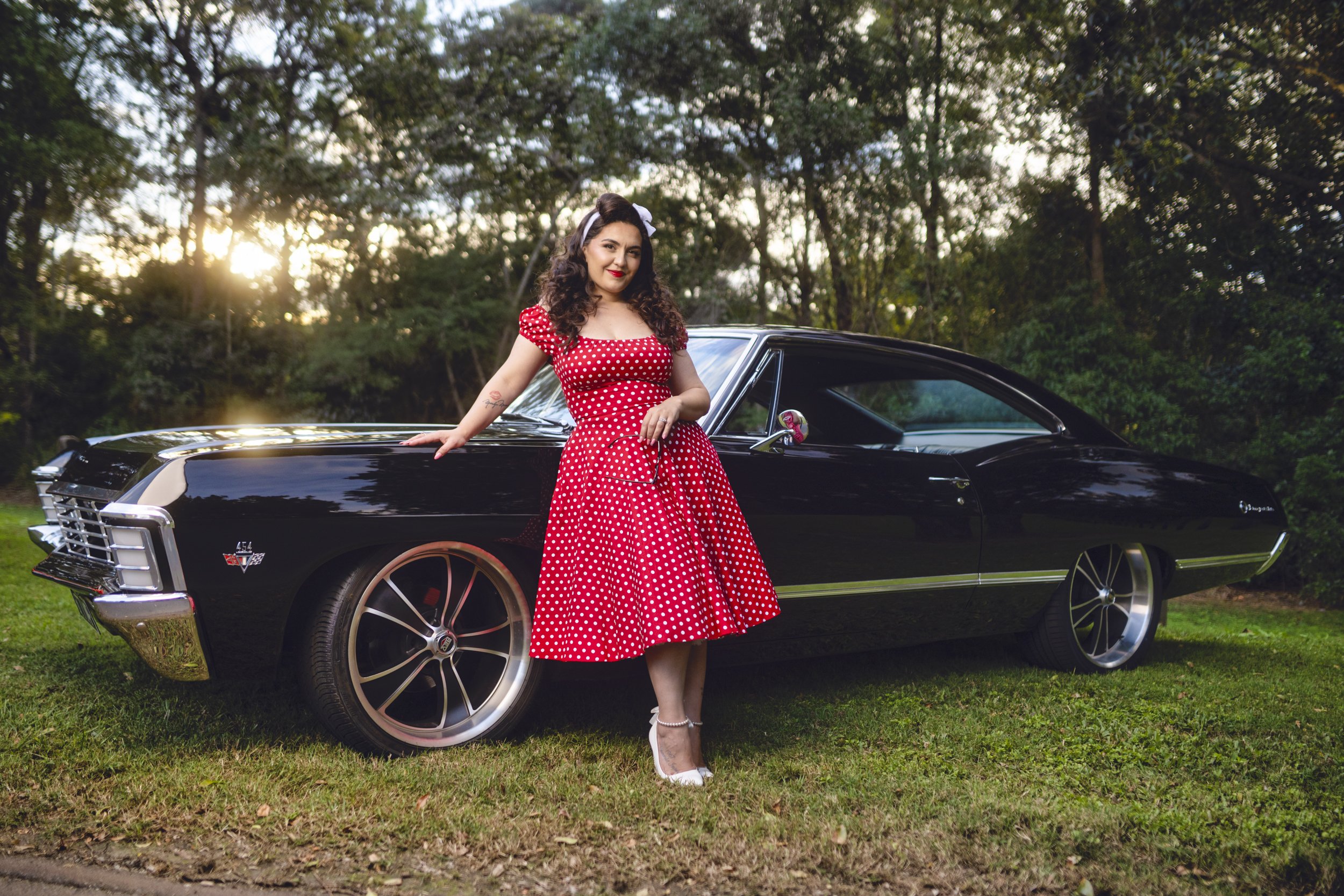
The car was eventually rebuilt between 2016 and 2018, but the Impala carries more family history than is immediately obvious.
Growing up, the family had a 1966 El Camino. Over time it unintentionally became something of a donor car, and its engine now lives beneath the bonnet of Amanda’s Impala.
So although the Impala arrived from America, there is a little piece of the family’s own motoring history sitting inside it.
And Amanda’s Impala would eventually pick up another story of its own.
After submitting photographs of the car to the production team working on Baz Luhrmann’s Elvis, someone came to inspect it in person.
They loved it.
Filming took place during the Covid period, which meant Amanda couldn’t simply wander onto the Warner Bros set with her car. Instead, on filming days she would take the Impala to the Movie World car park and watch as someone else drove it away into the backlot.
For the owner of a cherished classic car, that probably requires a fairly unusual level of trust.
When she collected the car afterwards, members of the production team would tell her little stories about what had happened on set that day.
One in particular stuck with her.
Apparently, when Tom Hanks saw the Impala, he immediately became excited. He told the crew he had once owned one himself and remembered having his children piled into the back seat.
Amanda still wishes she could have witnessed that moment.
Even now, when she watches Elvis and her car appears on screen, there is still that slightly surreal reaction.
That’s my car.
The film appearance hasn’t changed what the Impala means to Amanda, but it has added another chapter to its history. At car shows she now displays an Elvis poster beside it, and people who might otherwise have simply admired a beautiful black Chevy stop to ask questions.
It gives Amanda an excuse to tell the car’s story.
And there are plenty of stories to tell.
Sam and Marty
Sam’s connection with Chevelles goes back even further.
Her dad owned a 1966 Chevelle while she was growing up, and that car stuck with her. When the time finally came to find a classic of her own, a ’66 was what she really wanted.
Instead, Facebook Marketplace presented her with a 1967 Chevelle just fifteen minutes away.
She went to look at it around midday.
By six o’clock that evening, it was sitting in her garage.
That decision escalated quickly.
The car needed saving, and Sam immediately felt that familiar connection to the Chevelles she had grown up around. A ’67 might not have been the exact year she had imagined, but it was close enough.
More importantly, it felt right.
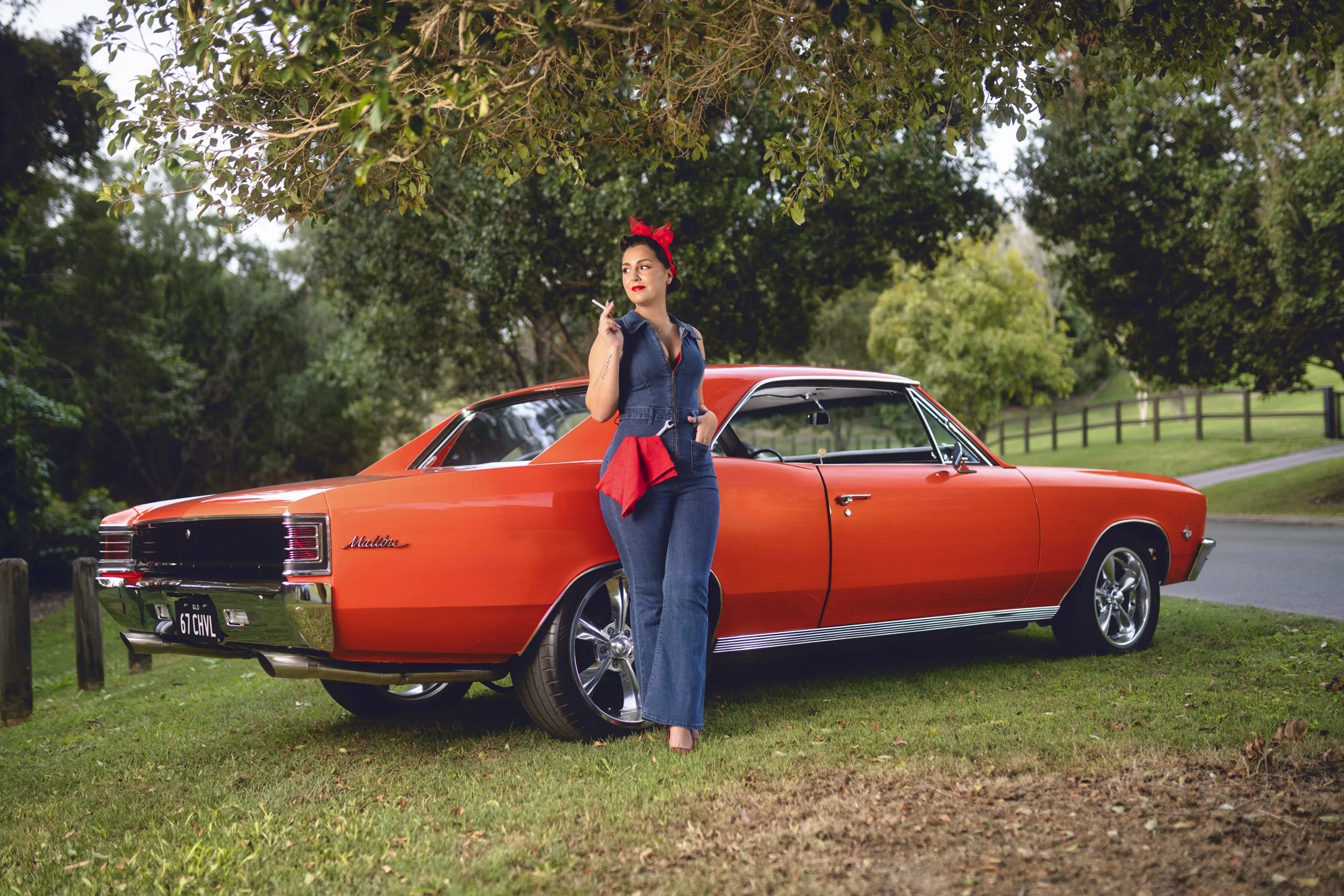
The Chevelle — now affectionately known as Marty — became Sam’s major project from 2022 through to 2025.
And restoring it was not some distant process handed over to somebody else.
Sam got involved.
She learned.
She made mistakes.
She fixed things.
She discovered that whatever budget you imagine when beginning the restoration of an old American car should probably be treated more as an opening suggestion than an actual financial plan.
Like most proper restorations, the Chevelle required patience, stubbornness and a willingness to figure things out when nothing quite went as expected.
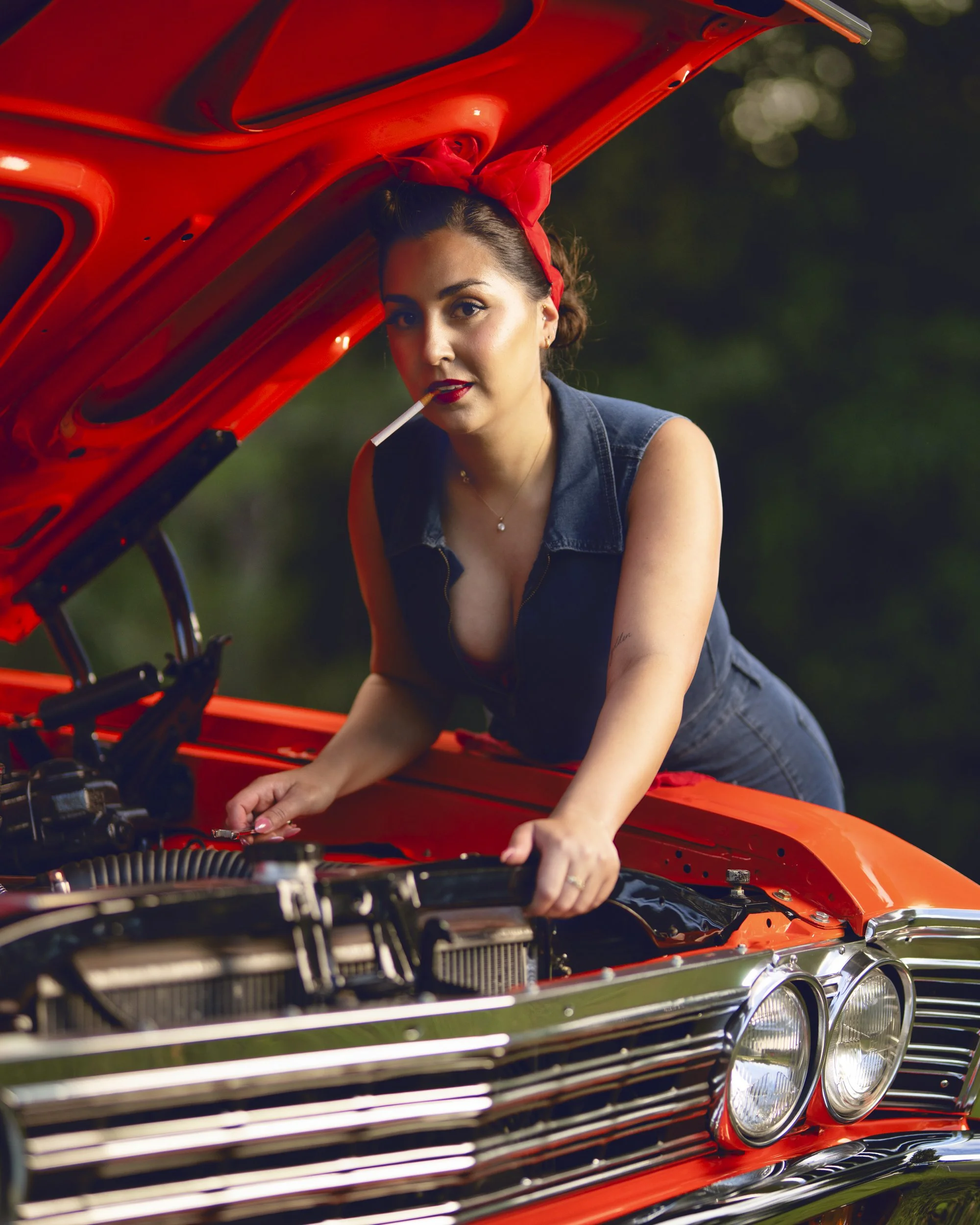
Fortunately, stubbornness is something Sam admits she has in reasonable supply.
Marty apparently inherited some of it too.
Of the two sisters’ cars, the Chevelle is comfortably regarded as the more temperamental. It has a habit of producing unexpected problems, usually accompanied by unexpected costs and a selection of names from Sam that probably wouldn’t make it into the workshop manual.
Their relationship could perhaps best be described as loving, with occasional negotiations.
The restoration itself became another connection between the sisters.
Although Amanda’s Impala had been completed several years earlier, Sam rebuilt the Chevelle in Amanda’s garage, right beside it.
When she needed to work out how something was supposed to fit, she could sometimes simply walk over to the Impala and have a look.
Two cars built years apart, but somehow still sharing the same garage and the same story.
Even the old family El Camino found its way into the Chevelle. Small pieces from it, including the rear-view mirror, now live inside Sam’s car.
Between the two Chevys, pieces of the family’s automotive past continue to travel with them.
Different Cars, Different Sisters
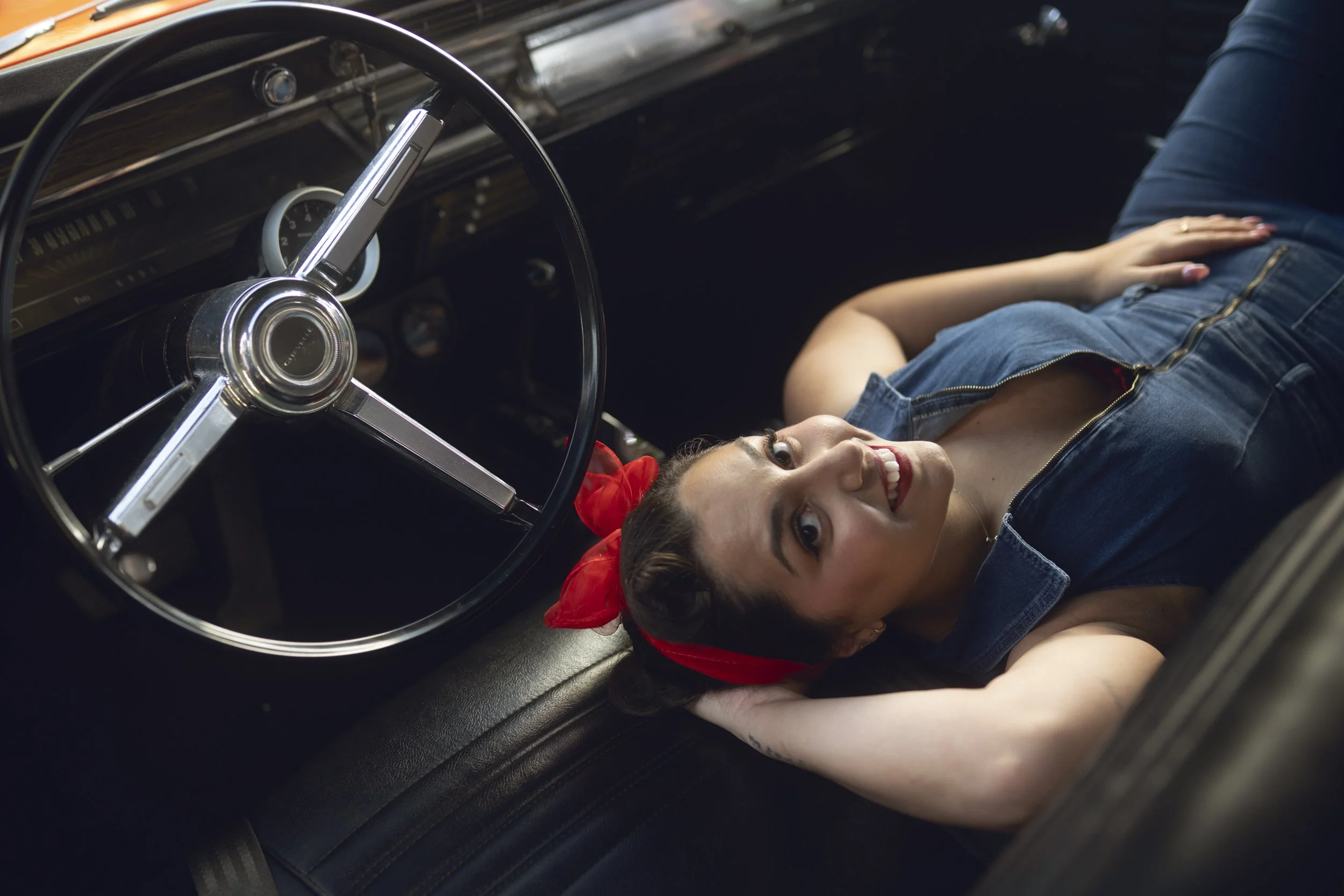
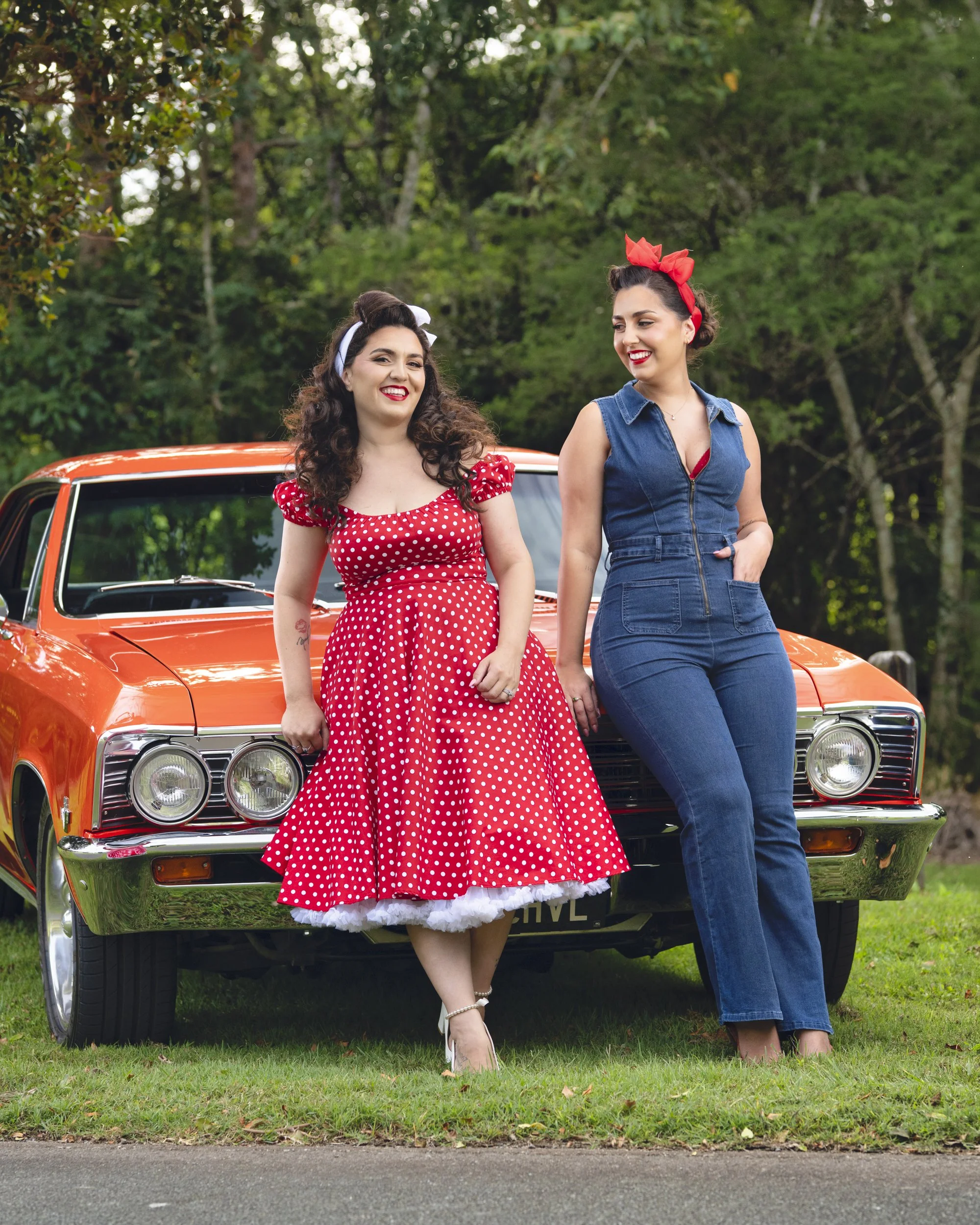
There is something wonderfully appropriate about the fact that Amanda and Sam own cars from the same year and manufacturer, yet ended up with two completely different-looking machines.
Amanda’s Impala is black, low and imposing.
It suits her.
She has always been drawn towards things that are a little mysterious and classic, and the Impala has that timeless presence. It doesn’t need to shout to command attention.
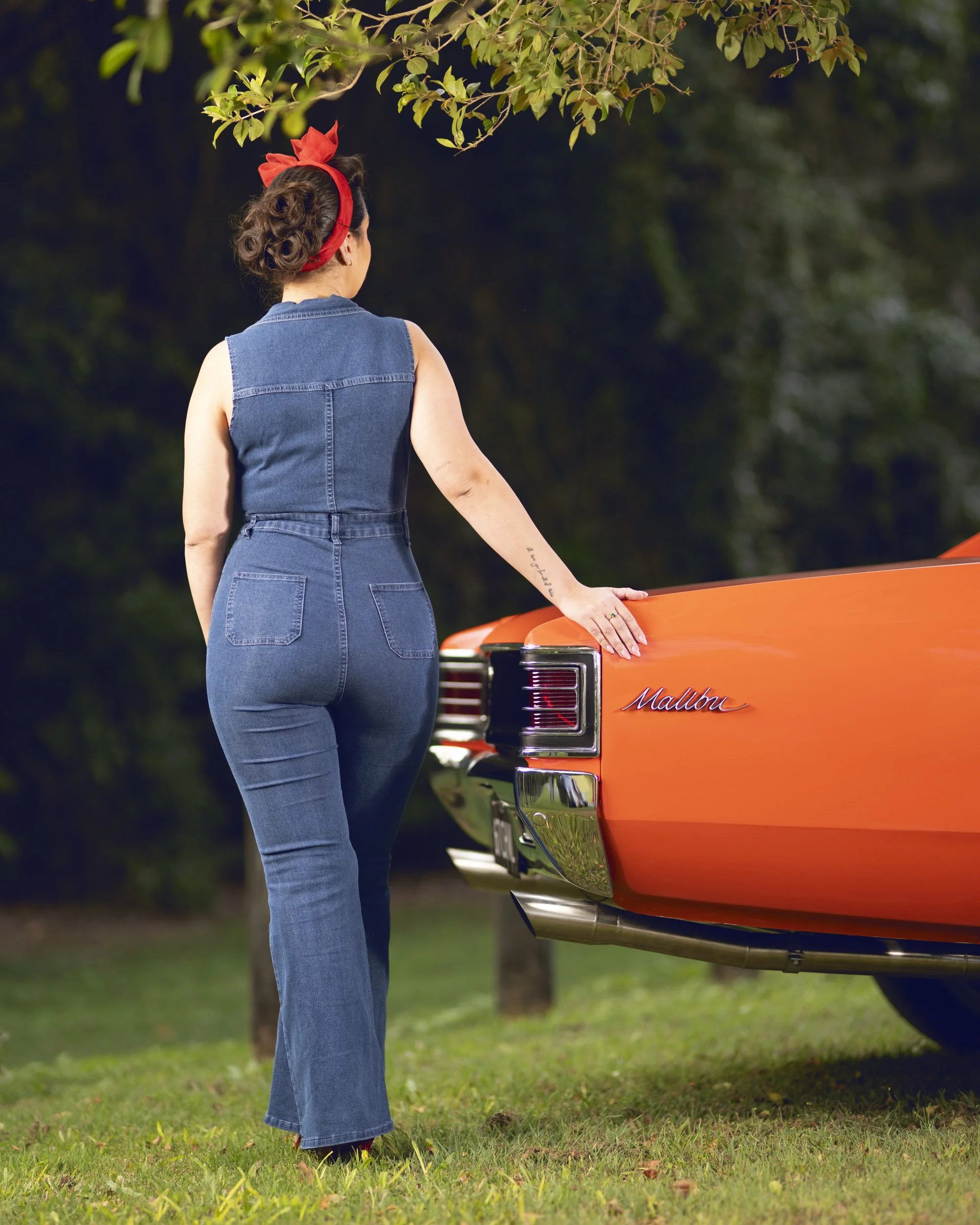
Sam’s Chevelle, on the other hand, is orange.
Very orange.
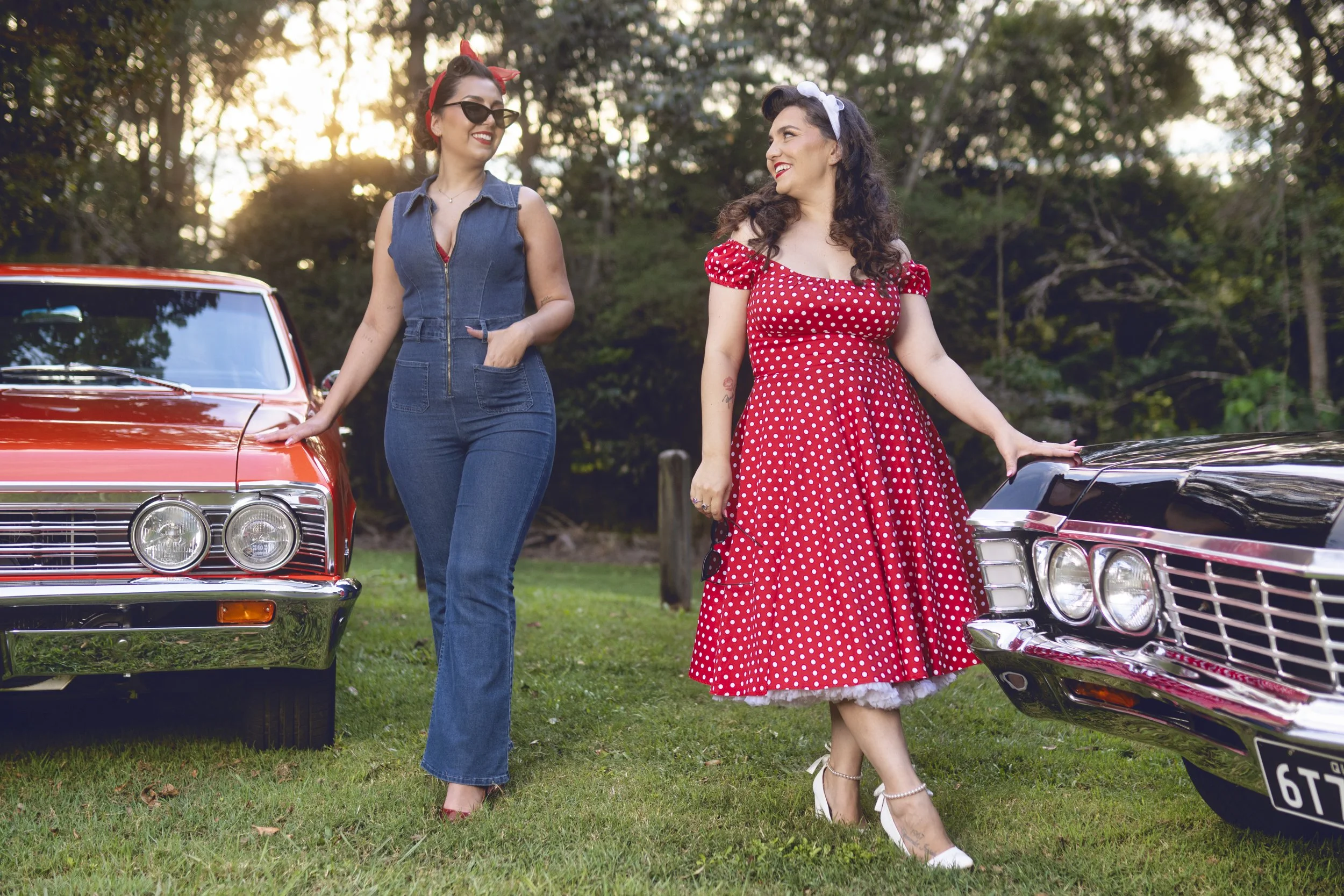
As the sisters freely admit, Sam has always been the louder one of the family, so ending up with a bright, extroverted Chevelle seems almost inevitable.
Park the cars beside one another and you can see the similarities.
Then you look again and see the differences.
The same could probably be said of the sisters.
That individuality also carries into the vintage and pinup world surrounding their cars.
Amanda has always loved getting dressed up. The glamour and confidence of vintage-inspired fashion naturally appealed to her, and the style feels completely at home alongside the black Impala.
For Sam, it goes back to childhood.
She remembers attending car shows with the family and seeing women dressed in beautiful 1950s and ’60s clothing. As a little girl, she would watch them and think about how beautiful they looked.
One day, she wanted to dress like that too.
Now she does.
And she turns up in an orange Chevelle she built herself.
More Than Just Cars
For both sisters, the significance of these cars goes well beyond horsepower, chrome and paint.
For Amanda, the Impala is something that belongs completely to her.
As a mum of three young boys, much of her life understandably revolves around family, work and children. The Impala gives her another part of her identity.
It is her thing.
A reason to dress up, head to a show, take the car for a drive and simply be Amanda for the day.
For Sam, building the Chevelle changed how she thought about what she was capable of doing herself.
Instead of immediately looking for someone else to solve a mechanical problem — particularly a man who might supposedly know more about cars — she became increasingly willing to have a go.
The restoration taught her that she could learn, problem-solve and get the job done herself.
Sometimes with considerable swearing, admittedly.
But done nonetheless.
That independence is perhaps one of the most interesting parts of their story.
Neither sister talks about proving a point.
They simply built their cars.
And now, when they cruise together, the reactions from other motorists occasionally provide a reminder that people still make assumptions.
Someone spots an old American Chevy and expects a man to be behind the wheel.
Then they draw alongside and discover two sisters driving two ’67 Chevrolets.
Amanda and Sam find those moments more amusing than anything else.
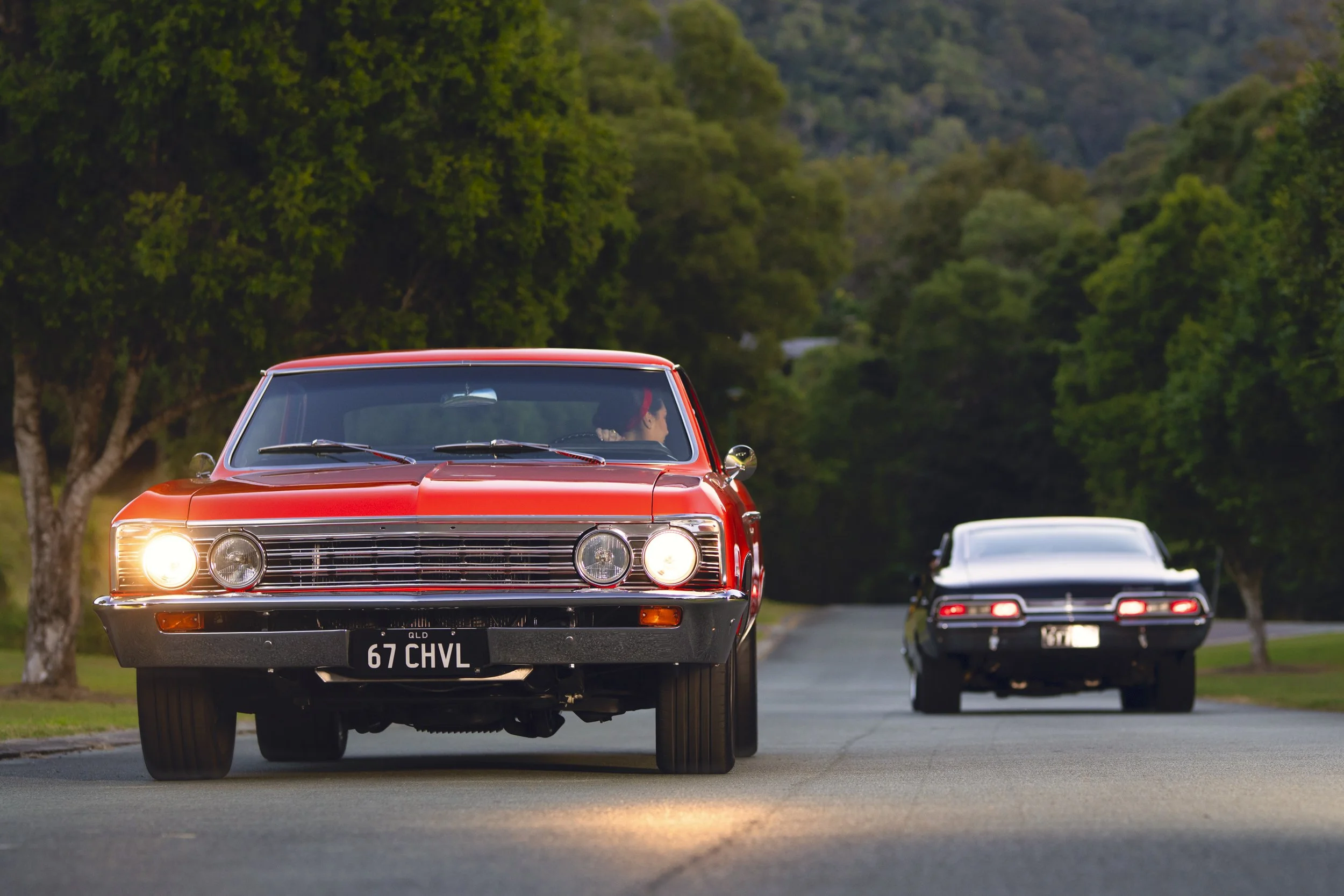
There is certainly pride when the two cars are cruising side by side, but not because they are trying to make a statement.
The pride comes from knowing what it took to get there.
A Family Story
As much as this is a story about Amanda and Sam, their dad is never very far from it.
Without him, both sisters doubt their lives would have followed quite the same automotive path.
He brought the cars into their childhood.
He created the environment in which spending time in the shed or going to the drag strip was normal.
He gave them the spark.
The sisters might have chosen different cars, colours and styles as adults, but that shared foundation is still there.
And that is perhaps why the two cars sitting together means so much.
They are not simply two finished restorations.
They represent childhood memories, family members, lost relatives, old cars that donated parts, years spent learning new skills, budgets that went horribly wrong, arguments with stubborn machinery and countless hours in the garage.
They also represent something the sisters now get to share.
If one wants to take her car somewhere, chances are the other one will come along.
They attend shows together.
They dress up together.
They drive together.
They maintain the cars together when something inevitably requires attention.
Neither has to enjoy the hobby alone.
Finished… Sort Of
Of course, anyone who owns an old car knows that the word finished should probably appear in quotation marks.
Sam still has plans for Marty, including upgrades to the dash and cooling system.
There is always another job waiting.
There are also more cars on the wish list.
A 1970 Plymouth Superbird gets a mention.
Amanda dreams of one day buying and rebuilding her parents’ vintage 1964 Leyland Leopard school bus.
For Sam, however, there is one car that sits above the others.
Her dad’s old 1966 Chevelle.
The car that helped start all of this.
If she ever had the chance, she would love to buy it back.
And perhaps that says everything about the story of Amanda and Sam.
It looks, at first, like a story about two sisters who happen to own very cool 1967 Chevrolets.
But the cars are really just the thread running through something much bigger.
Family.
Childhood.
Independence.
Identity.
Memories.
And two sisters who grew up surrounded by cars, eventually built the cars they had always wanted, and now get to enjoy them side by side.
Amanda once joked that if she could go back to the day she bought the Impala, she would give herself one piece of advice:
Buy ten of them.
Sam’s answer is a little different.
She would tell herself to stop wishing the restoration was finished and enjoy the process more.
Because, looking back, the build was part of the story too.
And with these two, you get the feeling there are still quite a few chapters left.