Stories Between the Frames
The making of "Vinyl Feels" and "Gettin' Outta Dodge"
There's something I've always loved about movies that a single photograph rarely attempts to do.
Not the explosions. Not the million-dollar sets.
The moments between the action.
The quiet pause before someone makes a decision. The drive out of town. Sitting alone with a cup of coffee. The instant a favourite song drops the needle and everything suddenly feels okay again.
With these two self-portrait projects—Vinyl Feels and Gettin' Outta Dodge—I wanted to create photographs that felt less like portraits and more like stills from films that don't actually exist.
The challenge was simple: tell an entire story using only a handful of images.
As it turns out... being both photographer and talent is surprisingly exhausting. It's difficult to direct yourself when you're also running back and forth pressing the shutter. I gained a whole new appreciation for professional models—and for remote triggers.
Gettin' Outta Dodge
We've all had those days. Work has been... let's say character building. The city feels crowded. Your phone won't stop buzzing.
And all you want to do is point the car towards the horizon and keep driving.
Gettin' Outta Dodge is exactly that feeling.
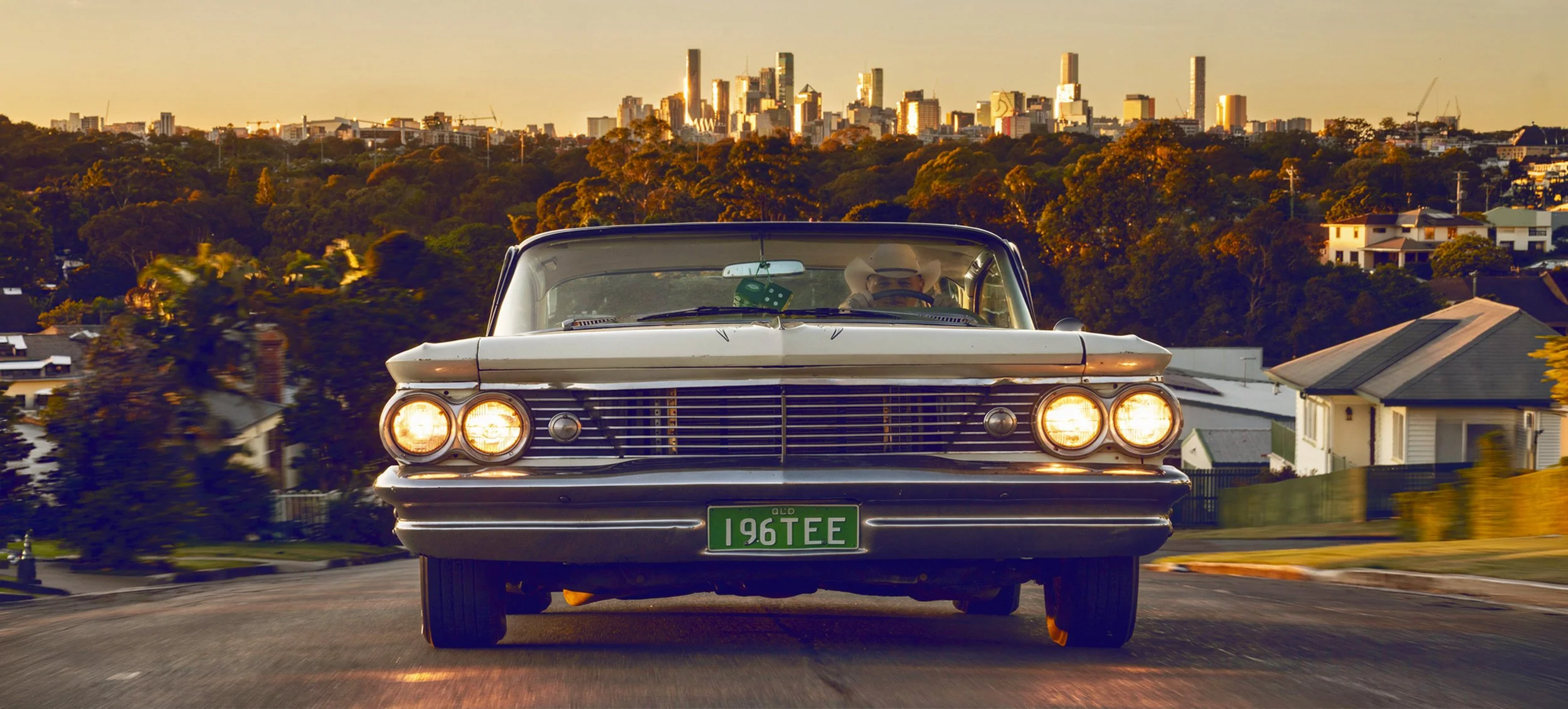
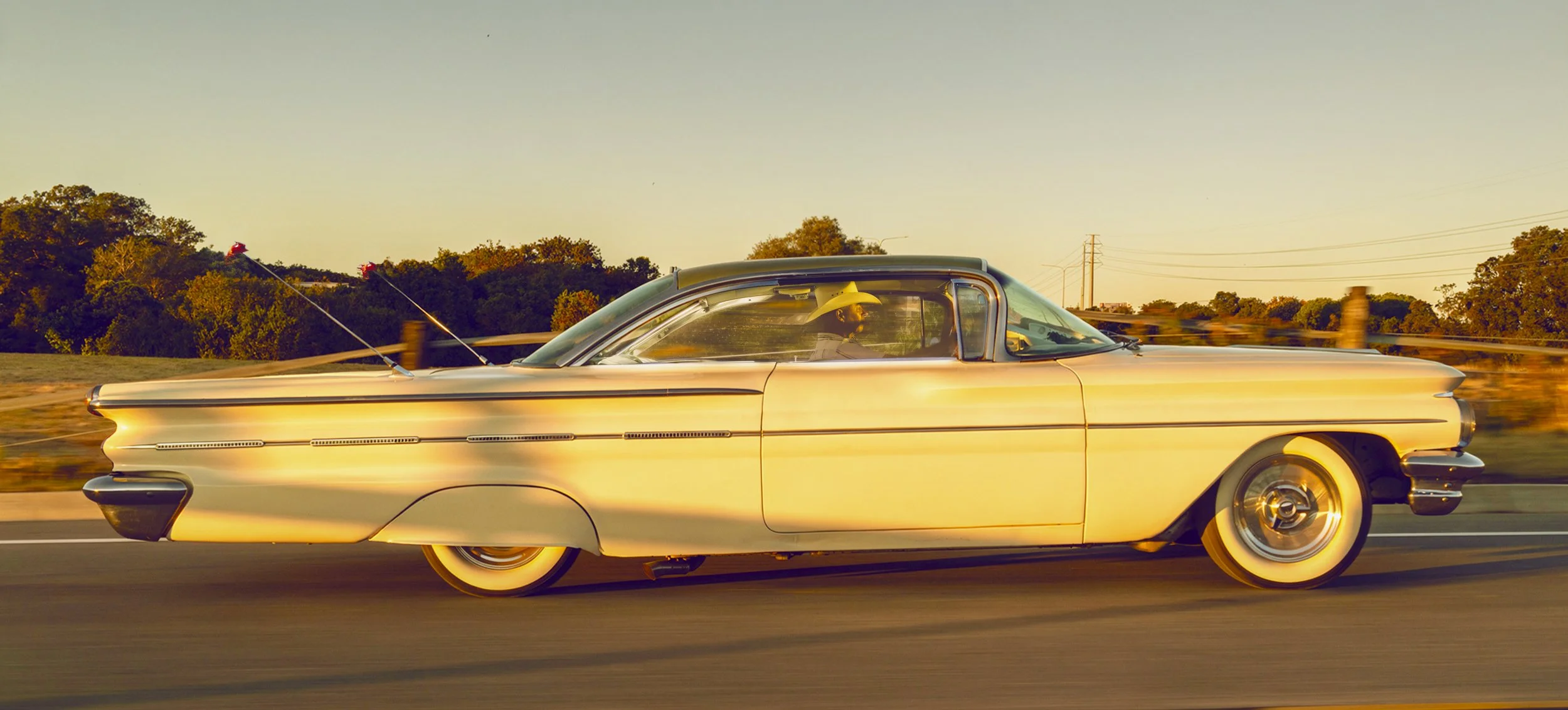
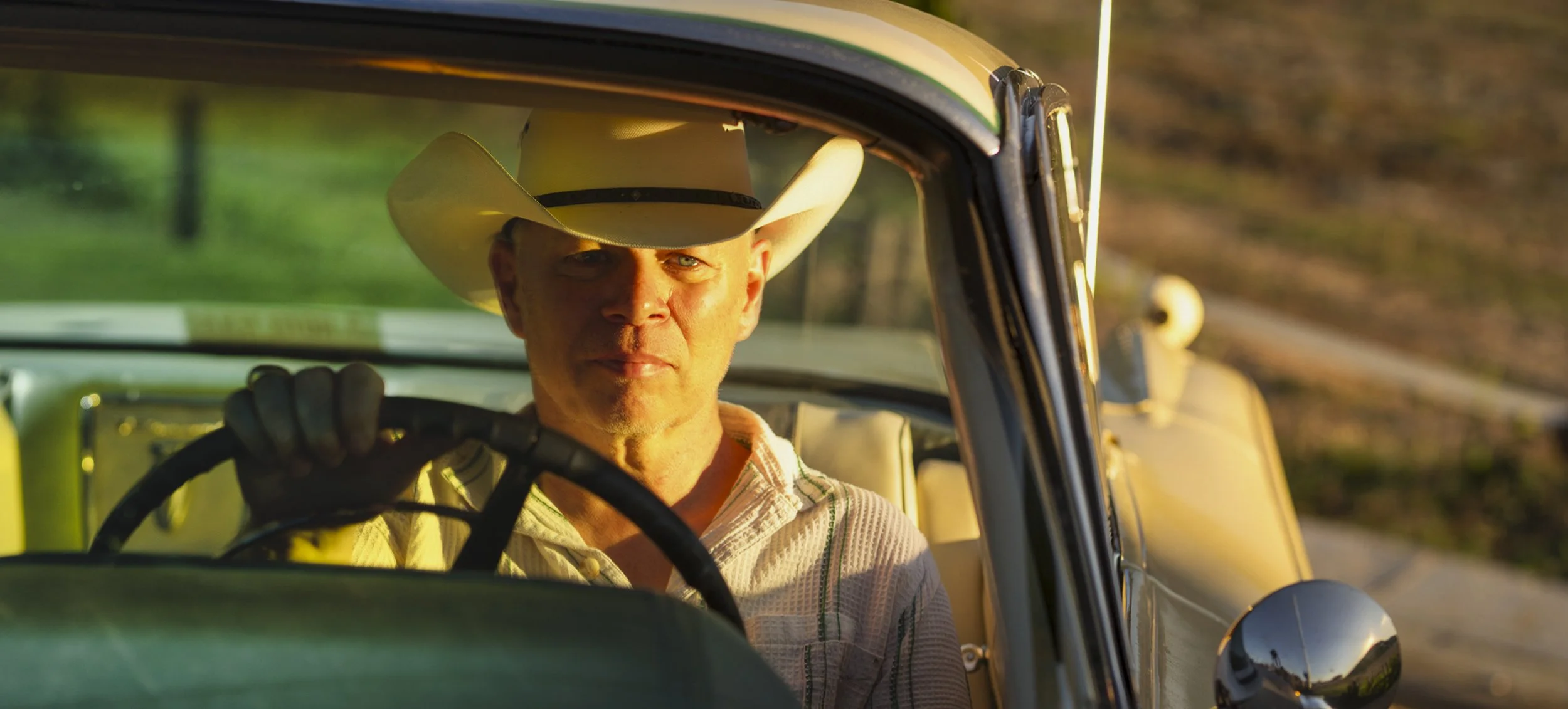
The opening image is intentionally cinematic—a wide establishing shot of my 1960 Pontiac Bonneville leaving Brisbane as the sun begins to set.
No destination, just the promise of one.
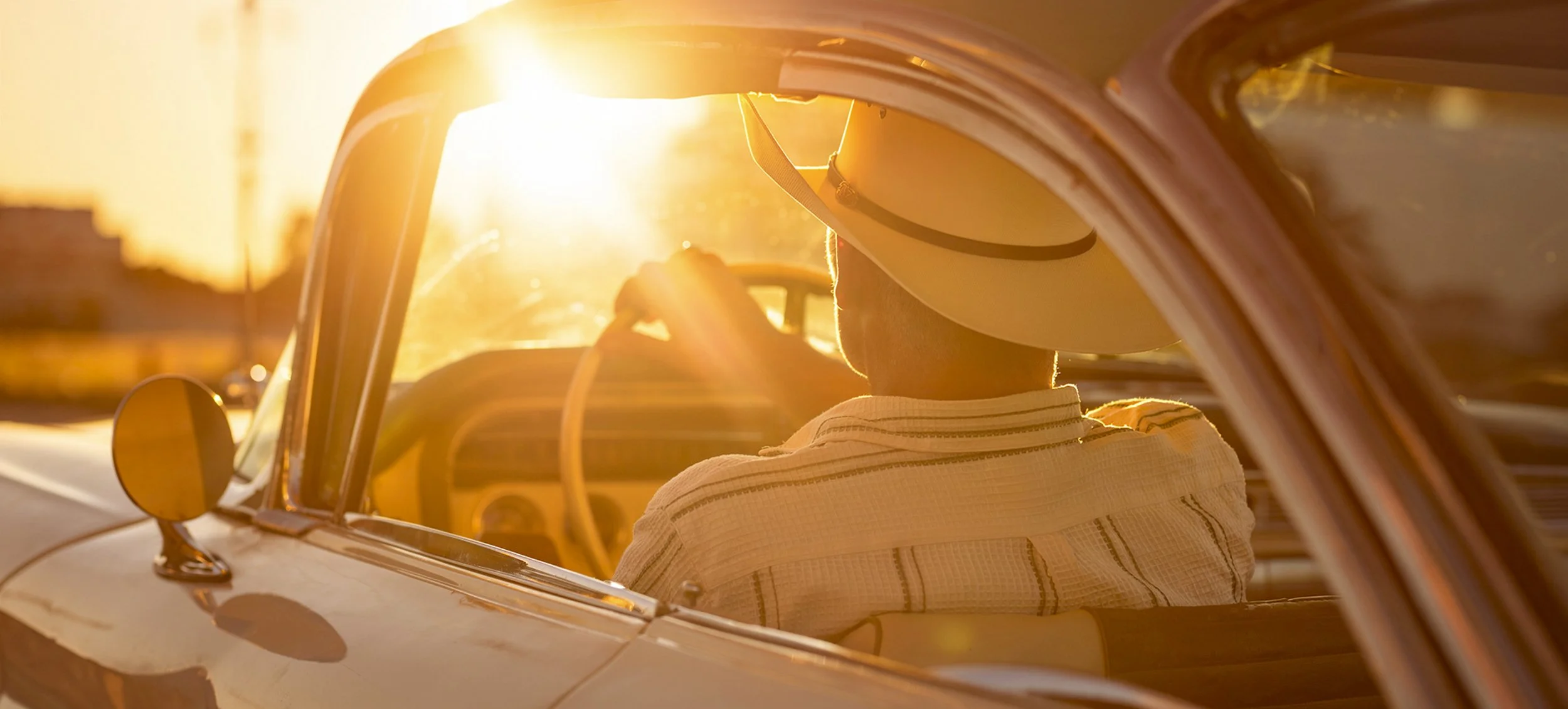
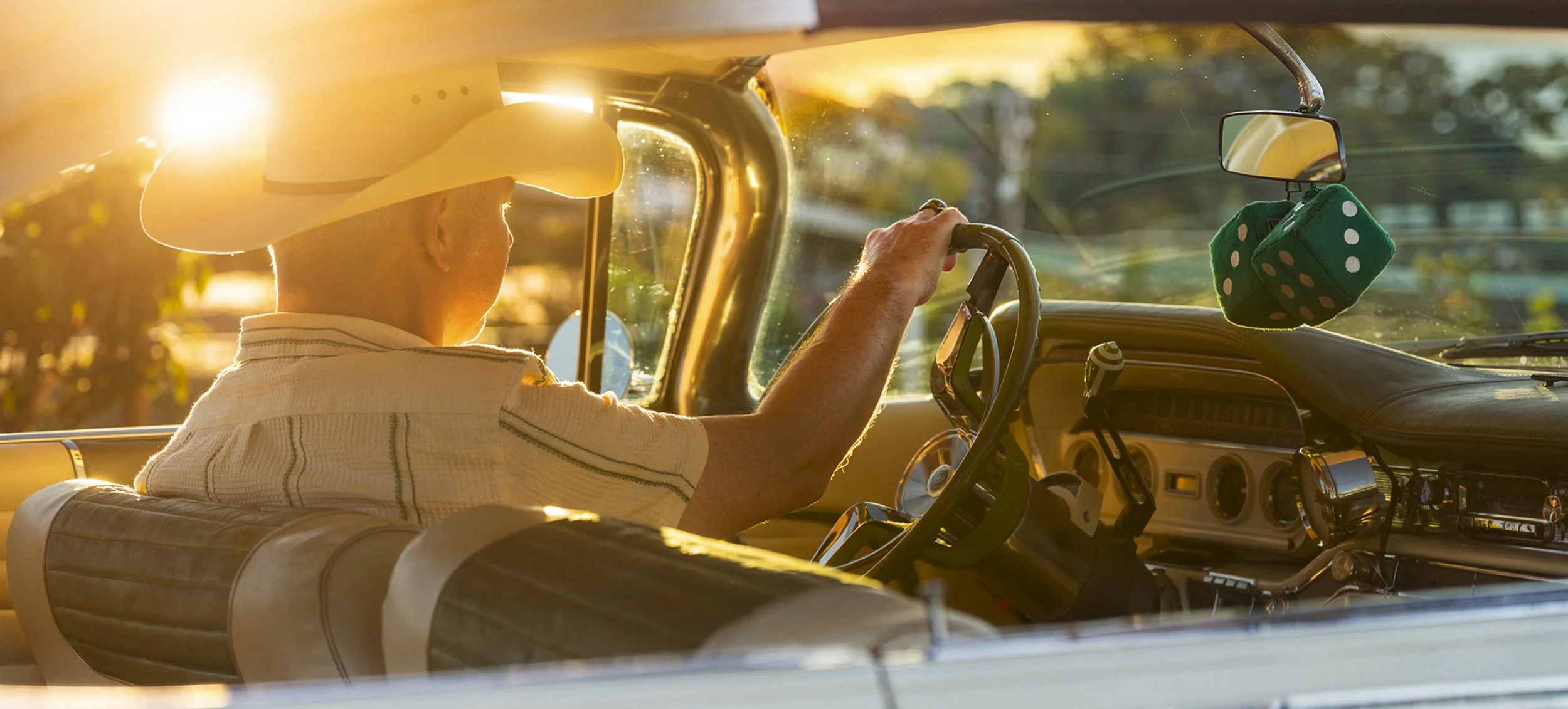
The remaining images move inside the car where the story becomes more personal.
Golden light pours through the windows. The city fades into the background.
It's simply me, the Bonneville, an empty road and the feeling that wherever I'm heading has to be better than where I just left.
Sometimes that's enough.
Vinyl Feels
Sometimes the best stories are the quiet ones.
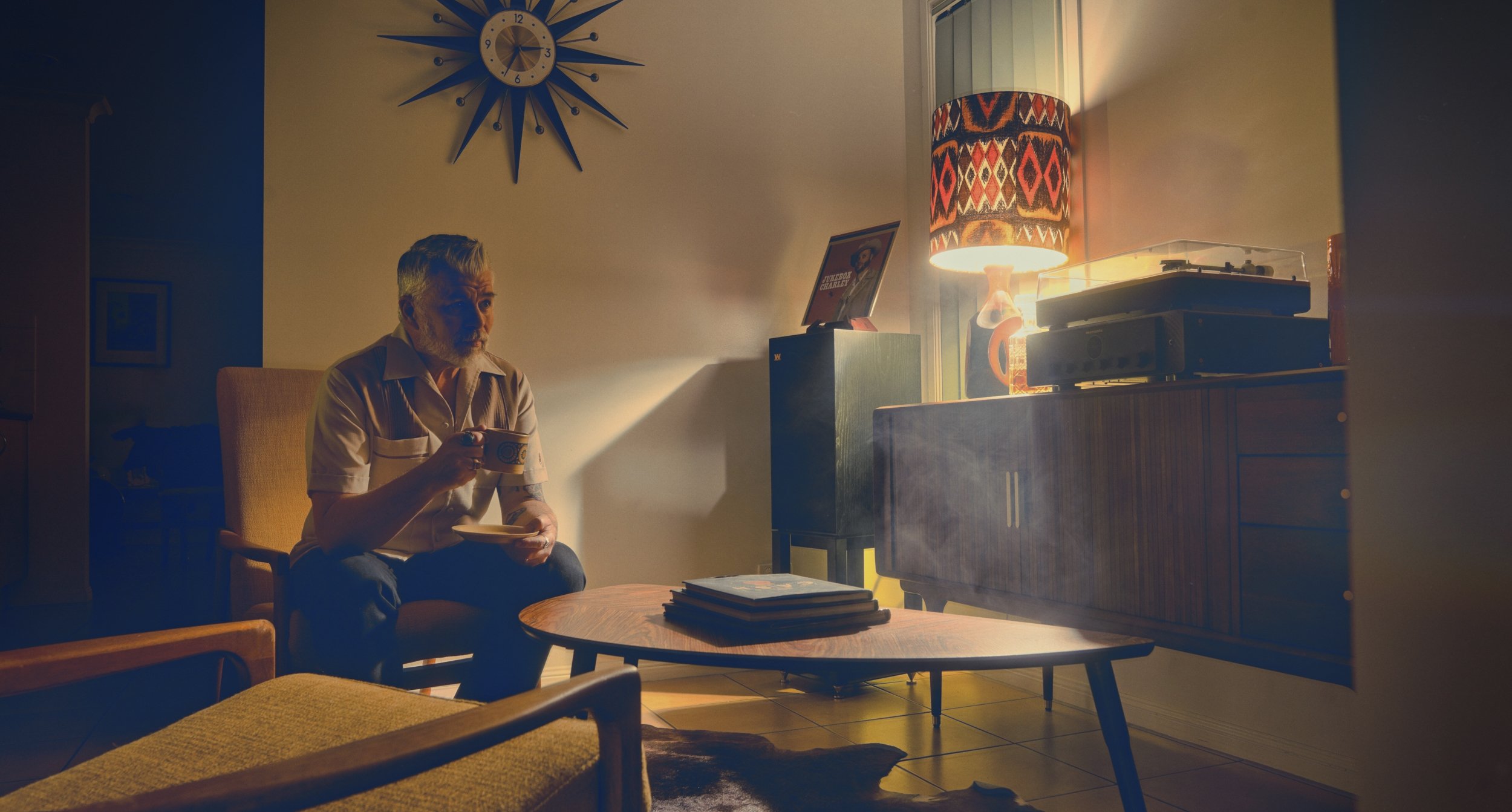
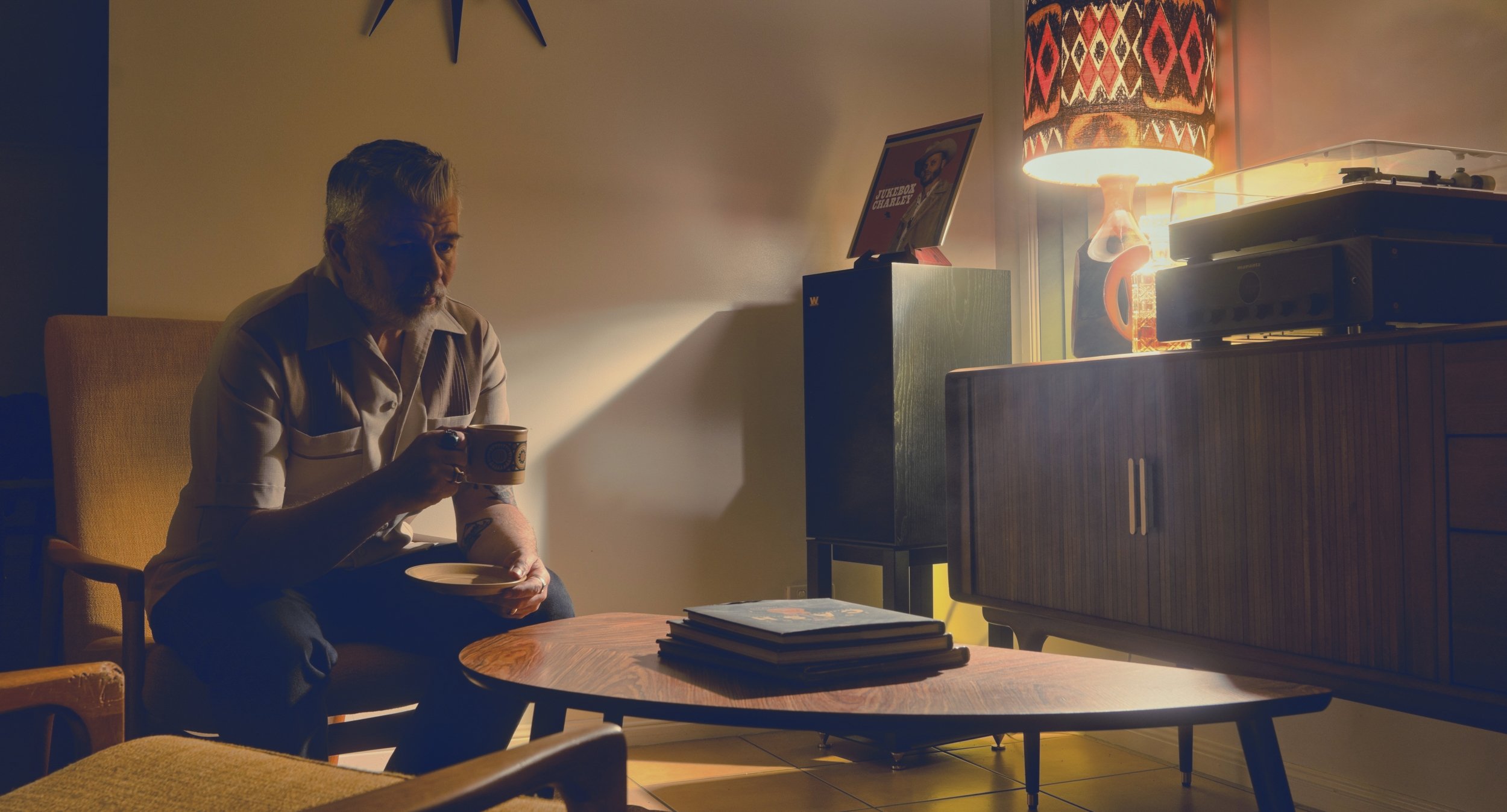
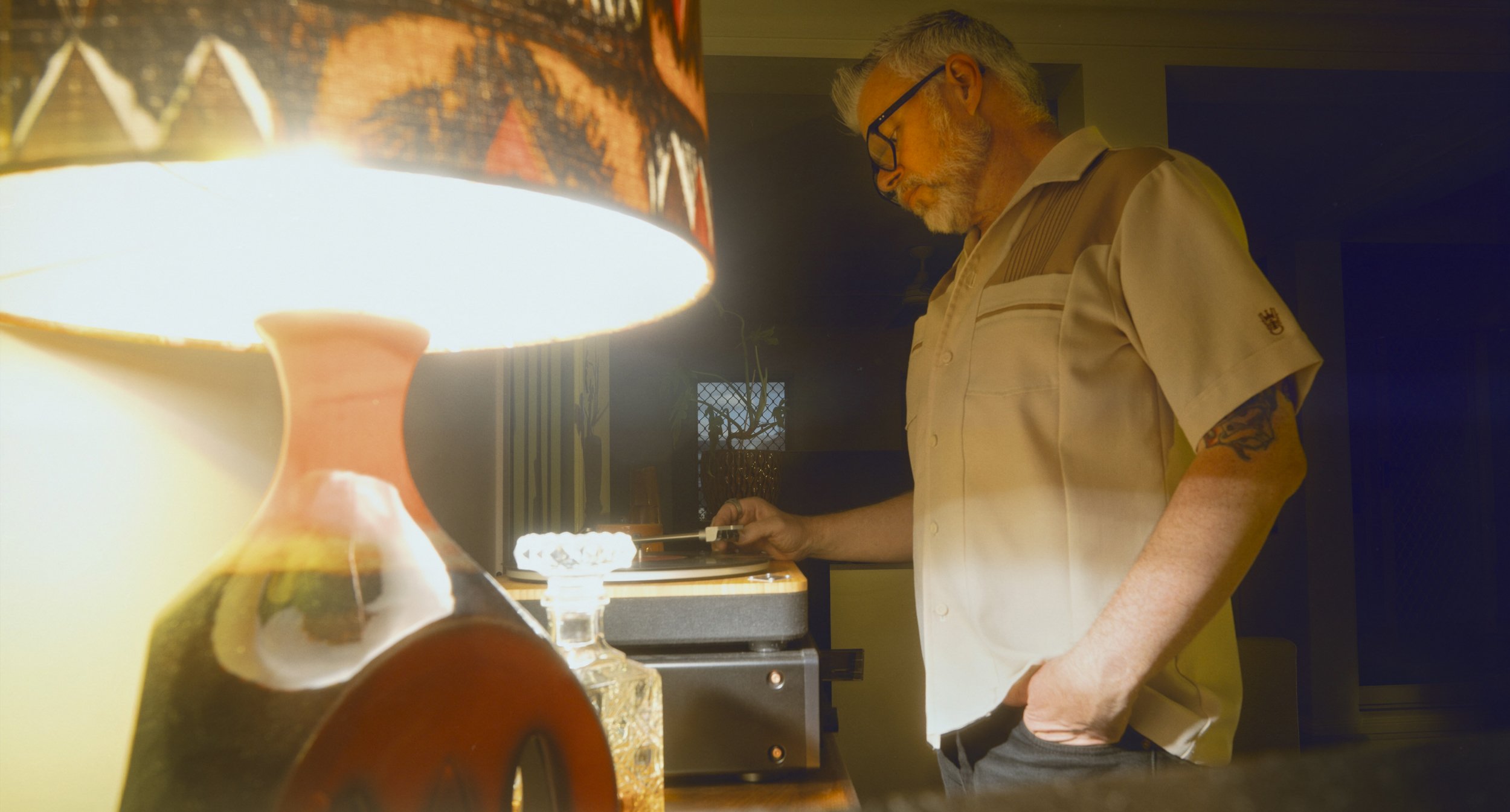
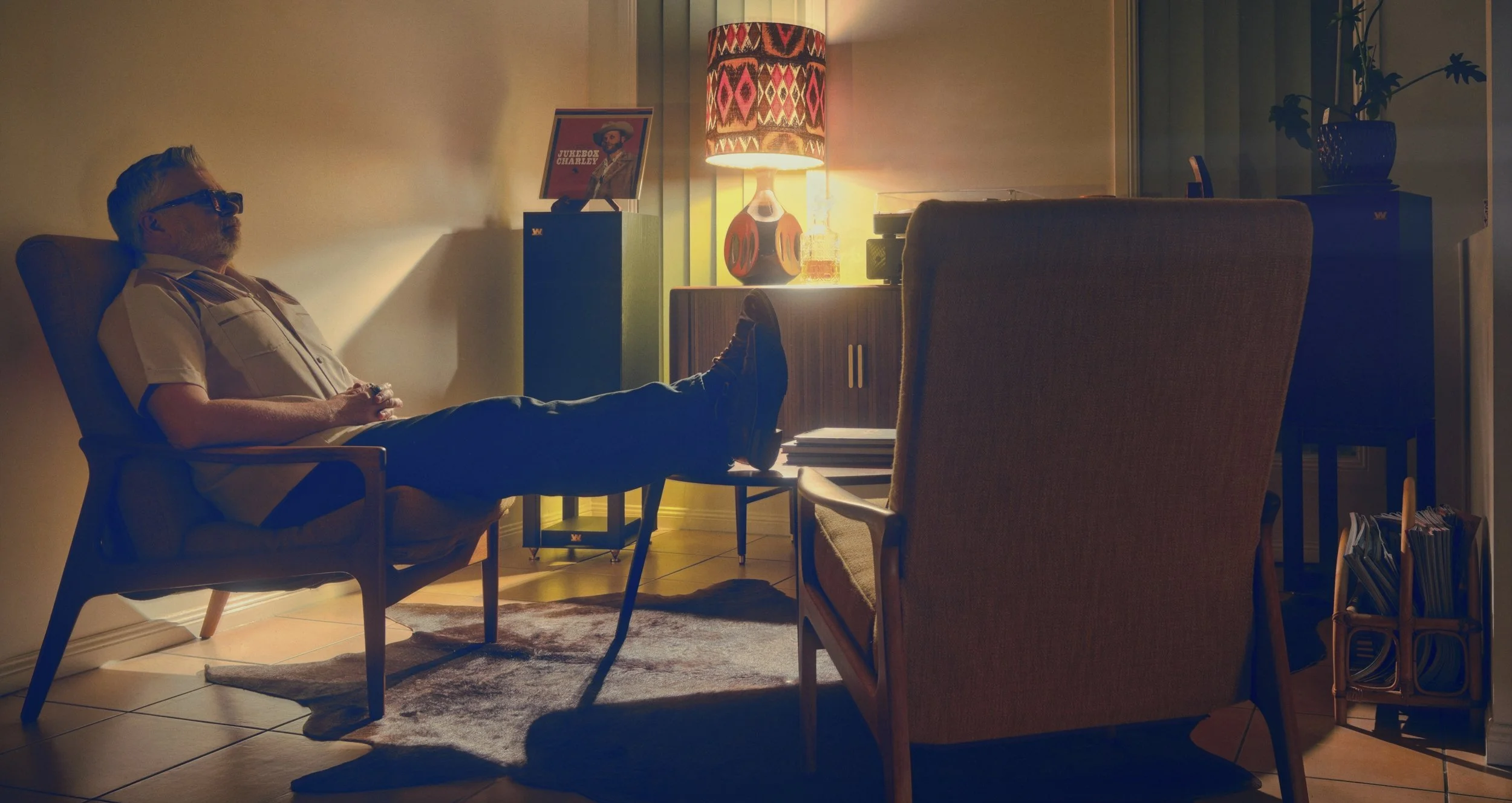
The inspiration for Vinyl Feels came from those evenings when everything feels a little flat. You're restless. Bored. Unsure what to do with yourself.
The first images show exactly that.
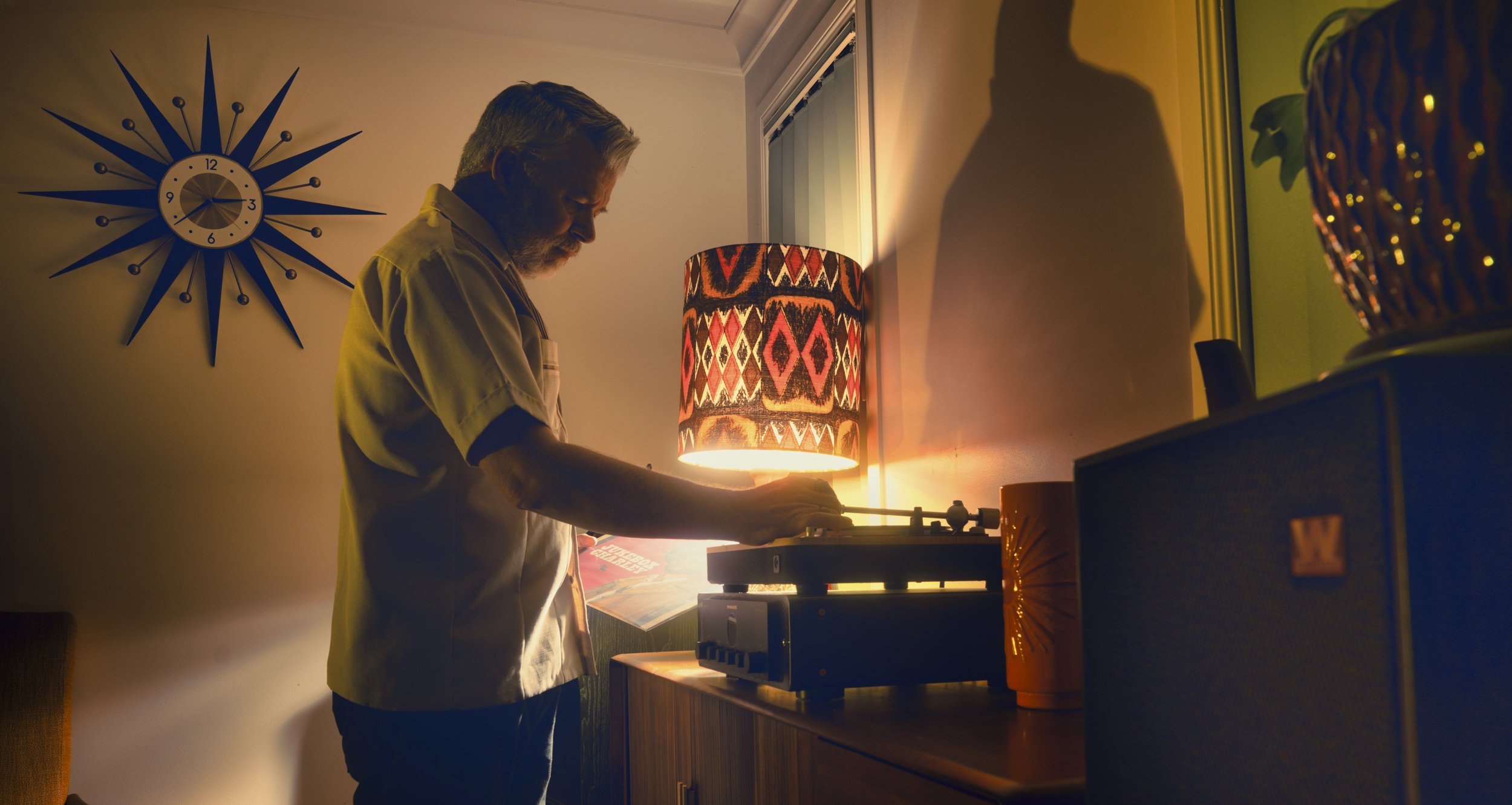
A dimly lit mid-century living room, a cup of coffee. Nothing much happening.
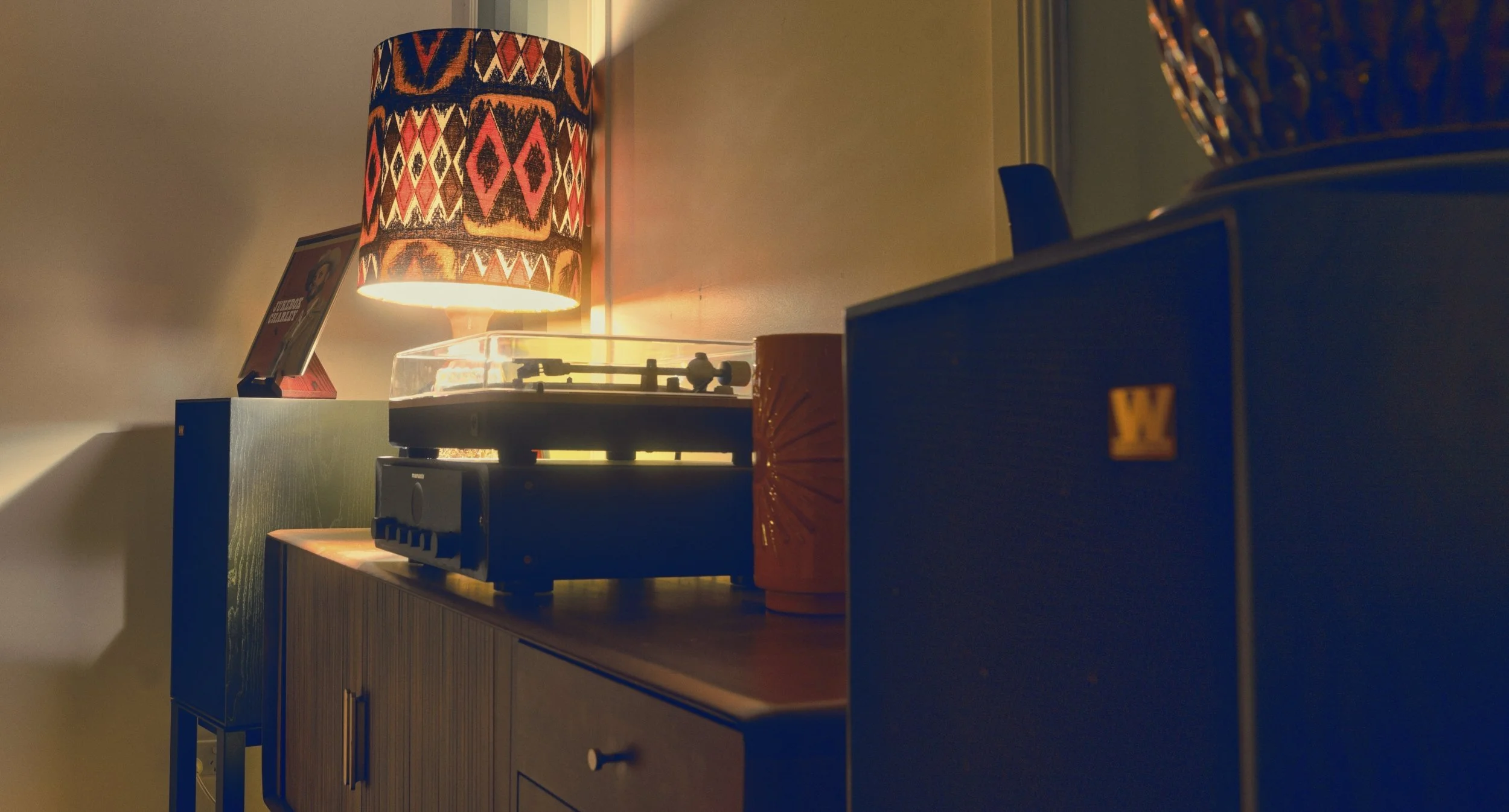
Then comes the small ritual that vinyl lovers know so well.
Choosing a record.
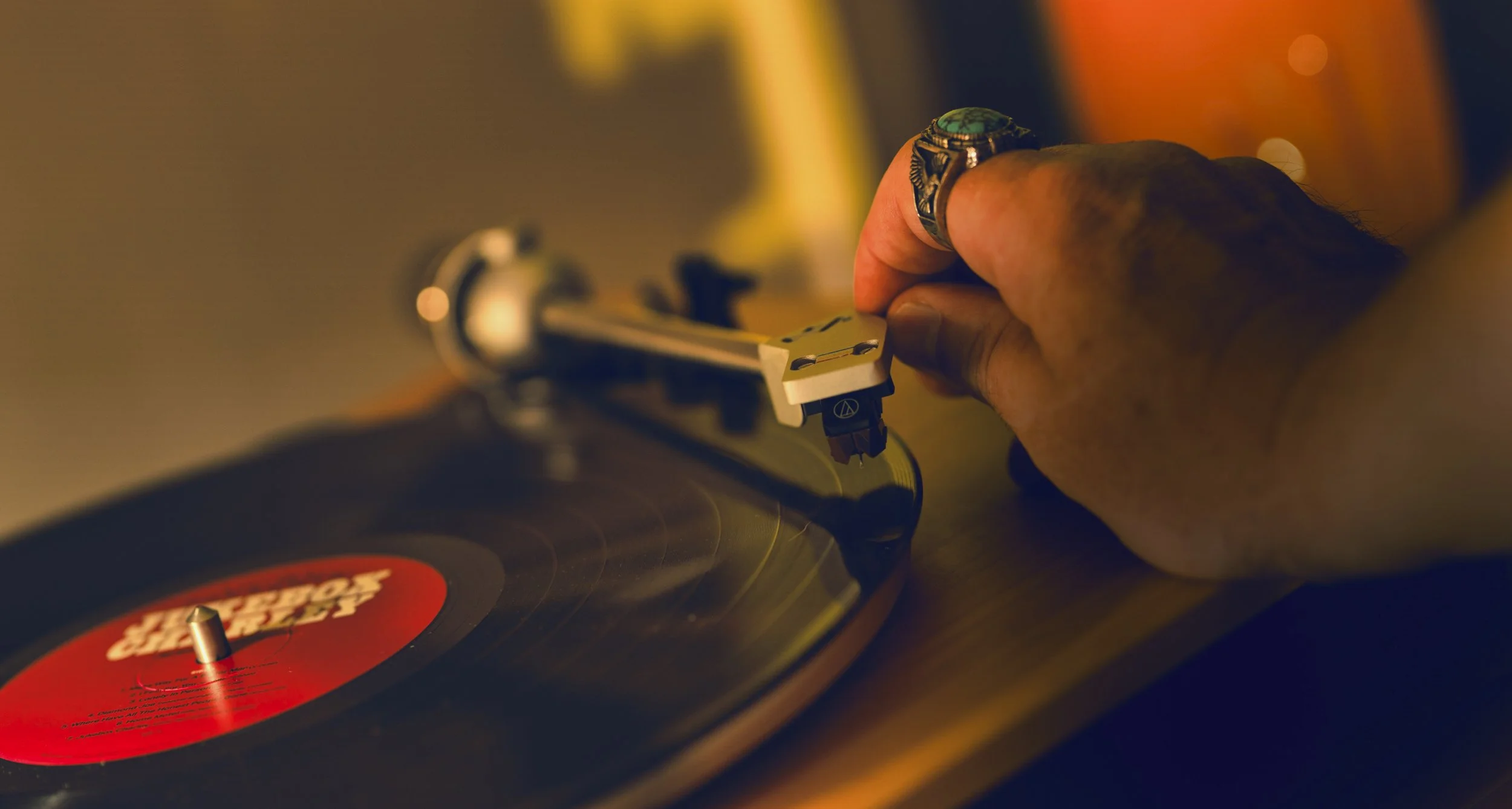
Lowering the needle.
Waiting for that first crackle.
Suddenly the room feels different.
Nothing around you has changed—but somehow everything has.
The music fills the space, the atmosphere softens, and the boredom disappears. It's less about listening to an album and more about escaping into it.
That was the story I wanted the photographs to tell.
Chasing the Movie Still
One thing both projects have in common is the presentation.
Rather than shooting traditional portrait ratios, I cropped everything to a cinematic widescreen format. That wider frame immediately changes how you read an image.
Instead of looking like a portrait, it begins to feel like you've paused a movie.
Hopefully your brain naturally starts asking questions.
"What happened before this?"
"What's about to happen next?"
That's exactly what I wanted.
A photograph doesn't always need to provide answers.
Sometimes it's more interesting when it asks questions instead.
Behind the Scenes
I’ve had people ask how I take my shots. What lighting, what equipment, how do I edit?
The answer is refreshingly uncomplicated.
Well... mostly.
There are a few pieces of gear that help sell the illusion.
Sony A7RV
The Sony A7RV was the camera behind both projects.
Its incredibly high resolution meant I could crop into cinematic ratios without sacrificing detail, while still capturing every texture—from the grain in the timber furniture to the chrome on the Bonneville.
For self-portraits it also gives me plenty of room to fine-tune composition afterwards if my mark wasn't quite where it needed to be. (Which happened more often than I'd like to admit.)
Sigma 24mm f/1.4 Art
For Vinyl Feels, the wide environmental shots were captured with the Sigma 24mm f/1.4 Art.
A wide lens allows the room itself to become part of the story.
Instead of simply photographing a person sitting in a chair, it lets the furniture, lighting and negative space help communicate the mood.
The viewer isn't just looking at me.
They're stepping into the room.
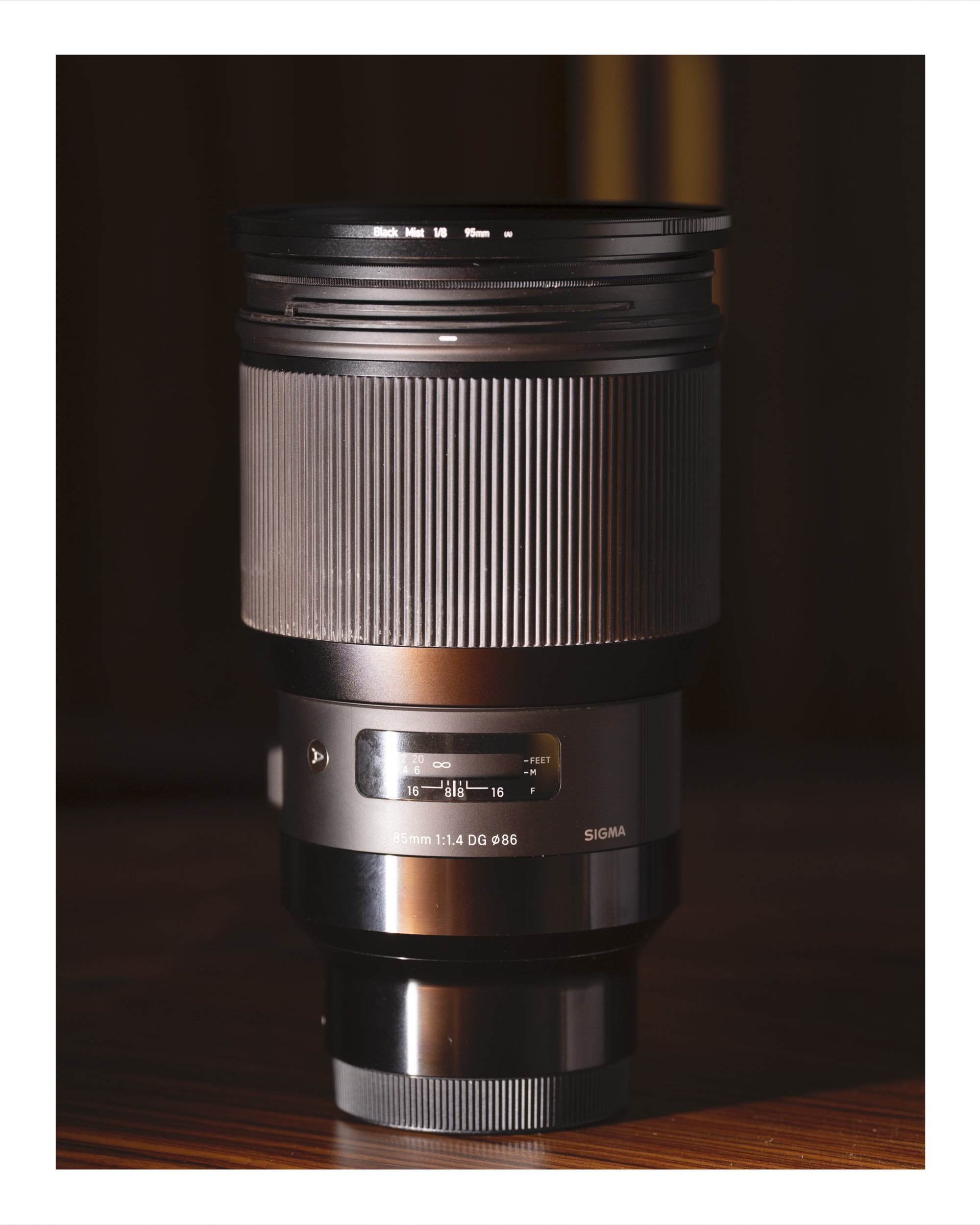
Sigma 85mm f/1.4 Art
The close-up shots in Vinyl Feels—along with every image from Gettin' Outta Dodge—were photographed with the Sigma 85mm Art.
The longer focal length produces beautiful subject separation while naturally compressing perspective.
For the Bonneville images, that compression helped pull the Brisbane skyline closer to the car, making the city feel like part of the journey rather than something miles away in the distance.
It's also one of those lenses that seems incapable of taking an ugly photograph.
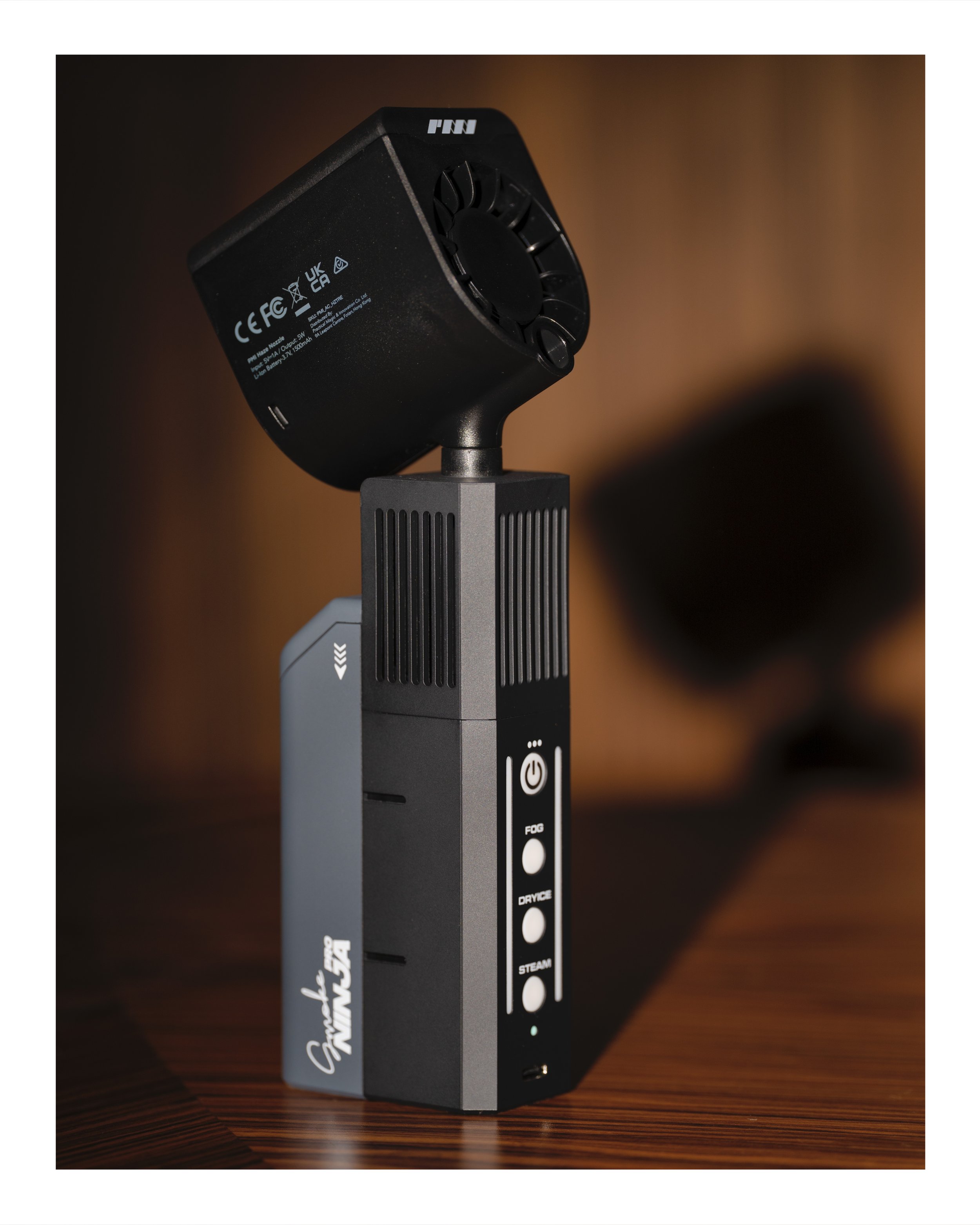
SmokeNINJA Pro Hazer
If you've ever wondered why movie lighting always looks so... movie-like... the answer is often haze.
The SmokeNINJA Pro Hazer filled the room with a fine atmospheric mist, making every beam of light visible.
Without haze, light simply illuminates a room.
With haze, light becomes part of the photograph.
Suddenly it has depth.
Shape.
Presence.
It's one of those tools that feels like cheating—in the best possible way.
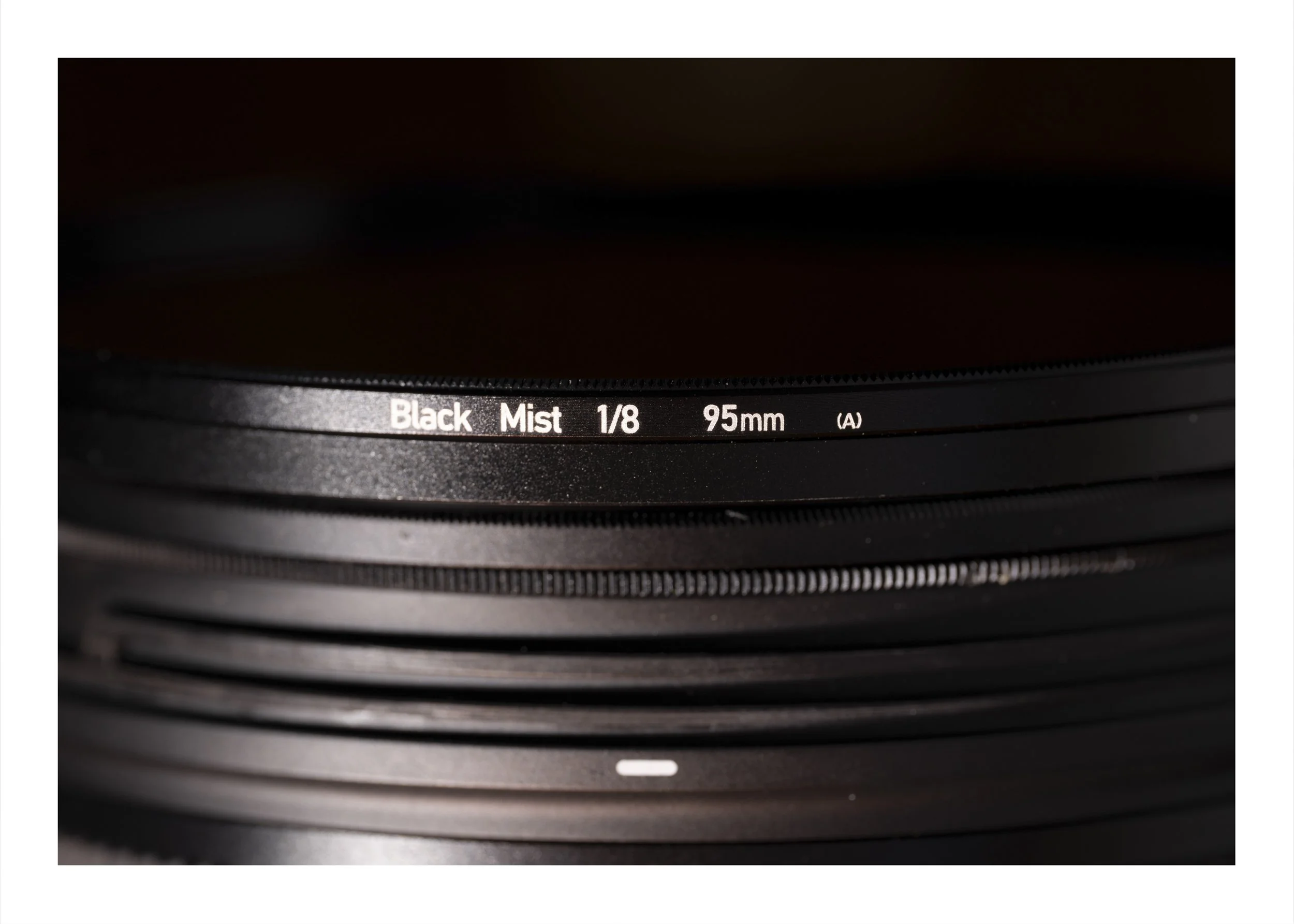
1/8 Black Mist Filter
Every image was shot through a 1/8 Black Mist filter.
Rather than making an image soft, it subtly blooms bright highlights and lowers digital sharpness just enough to remove that ultra-clinical modern look.
Think of it as giving your camera permission to be a little nostalgic.
Streetlights glow.
The practical lamp becomes warmer.
Sunlight wraps around subjects instead of cutting through them.
It's a tiny piece of glass that quietly does a lot of heavy lifting.
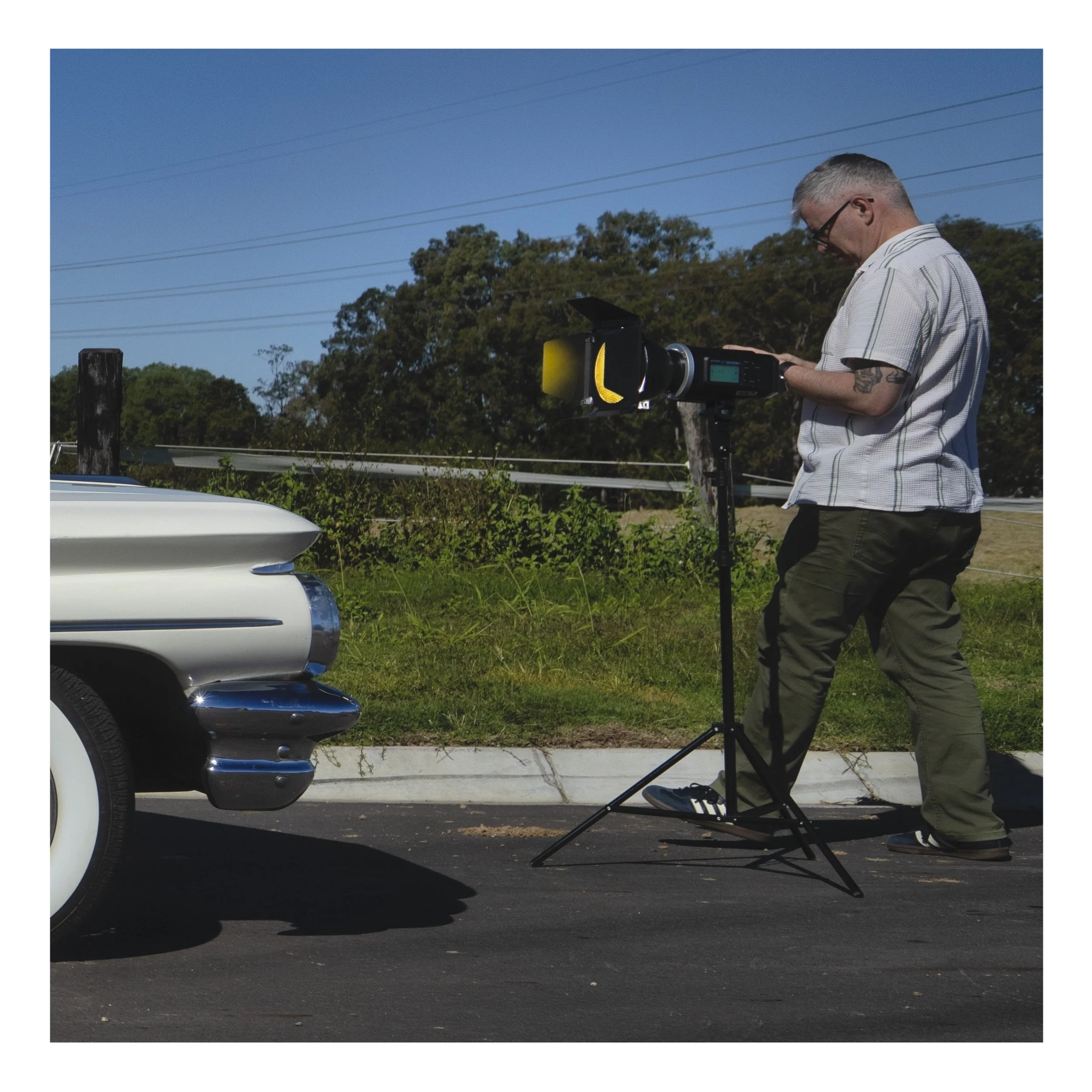
Creating the "Sun"
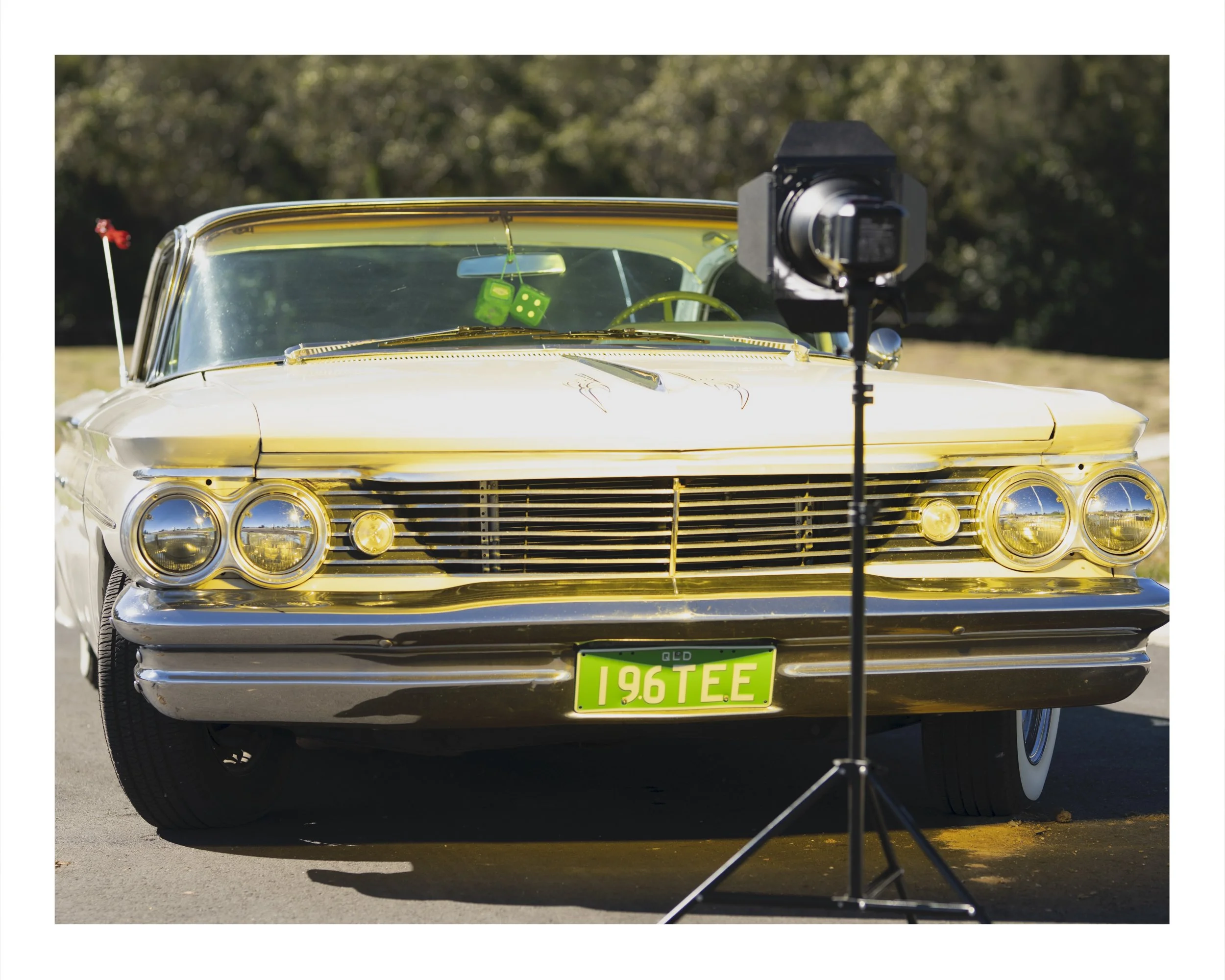
One of the biggest surprises is that the bright warm sunlight in “Outta Dodge” wasn't sunlight at all.
It was created using a Godox AD600BMPro fitted with a 7-inch reflector, yellow gel and barn doors.
The reflector concentrated the light into a tight beam.
The gel warmed its colour.
The barn doors controlled the spill so it looked like sunlight streaming through an unseen window.
Combined with the haze, it produced a convincing late-afternoon sun—even if the weather outside had other ideas.
Photoshop
The final ingredient was Photoshop.
The editing wasn't about dramatically changing the images—it was about reinforcing the feeling.
Warm colour grading.
Gentle highlight bloom.
Subtle contrast adjustments.
Vintage tones.
Everything was designed to support the story rather than distract from it.
The goal was never to make the photographs look old.
It was to make them feel familiar.
Like discovering a forgotten frame from a film you somehow remember watching years ago.
Why Self Portraits?
There's something oddly satisfying about creating an entire production on your own.
You're the photographer.
The lighting assistant.
The stylist.
The model.
The tea maker.
It's equal parts photography, problem-solving and controlled chaos.
More importantly, self-portrait projects let me experiment without pressure. Every shoot becomes a chance to test ideas, refine lighting techniques and tell stories that don't rely on clients, locations or big budgets.
If these two series prove anything, it's that compelling cinematic images don't require a film crew—just an good idea, some carefully placed light, a little atmosphere, and perhaps a slightly unhealthy willingness to sprint back and forth between the camera and the set.
Because sometimes the best stories don't need dialogue.
They just need one frame that makes you wonder what happens next.